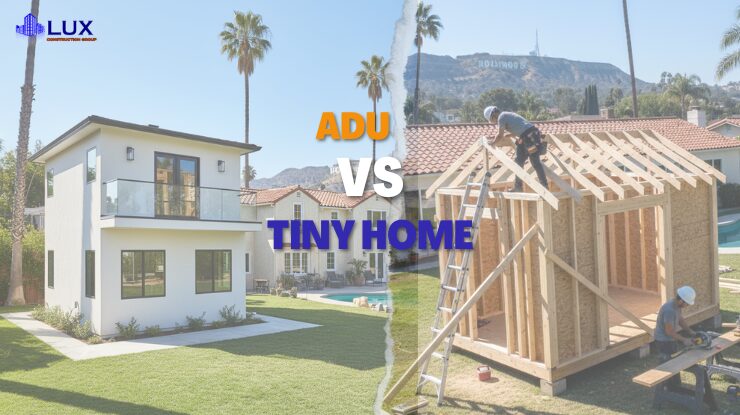
Homeowners in Los Angeles often ask whether a Tiny Home can legally function as an Accessory Dwelling Unit (ADU) for full-time living. The answer depends on foundation type, zoning compliance, building code standards, and permit approval.
Since California reformed ADU laws in 2016, backyard housing has expanded rapidly.
By 2022, California was permitting roughly 25,000 ADUs per year, making up about 19–20% of all new homes statewide
According to the California Department of Housing and Community Development, ADU permits increased from 1,300–1,400 in 2016 to more than 25,000 in 2022, representing nearly 20% of new housing permits statewide. [source]
Los Angeles now issues several thousand ADU permits per year, making it one of the leading ADU cities in California,
At the same time, Tiny Homes—especially Tiny Homes on Wheels (THOWs)—have gained popularity due to lower upfront costs, typically $30,000 to $60,000.
This guide explains:
- When a Tiny Home qualifies as an ADU
- When it does not
- Zoning and permit requirements in Los Angeles
- Cost differences
- Property value impact
- Rental legality
Lets get started!
Can You Legally Use a Tiny Home as an ADU in Los Angeles?
Short answer: A Tiny Home can be used as an ADU only if it is permanently installed, built to residential code, and fully permitted.
In typical Los Angeles residential zones, a Tiny Home on Wheels is treated as an RV, not a dwelling unit, and therefore cannot be approved as a permanent ADU for full‑time occupancy.
When a Tiny Home Qualifies as an ADU
To qualify, the structure must:
- Be installed on a permanent foundation
- Comply with California Residential Code
- Connect to city water, sewer, and electricity
- Be permitted through the Los Angeles Department of Building and Safety
- Receive a Certificate of Occupancy
Once approved, the unit is legally classified as an ADU.
California Government Code §65852.2 requires ministerial approval within 60 days of a complete ADU application.
If you are reviewing eligibility, see our overview of ADU permit requirements in Los Angeles.
When a Tiny Home Does Not Qualify
A Tiny Home typically does not qualify if it:
- Is built on wheels (THOW)
- Is registered as an RV
- Is not connected to permanent utilities
- Is used for long-term occupancy without permits
Wheels = RV classification = not permanent housing.
Foundation + permit = ADU classification.
What is an ADU Under California Law?
An Accessory Dwelling Unit (ADU) is a secondary residential unit located on the same lot as a primary residence. Under California Government Code §65852.2, cities must allow ADUs that meet objective standards.
An ADU must:
- Be self-contained (kitchen, bathroom, sleeping area)
- Have a separate entrance
- Be permanently affixed to the property
- Meet residential building codes
Types of ADUs in Los Angeles
Los Angeles allows:
- Detached ADU
- Attached ADU
- Garage Conversion ADU
- Junior ADU (JADU, up to 500 sq ft)
For dimensional limits, see ADU size limits in Los Angeles.
What Is a Tiny Home in Legal Terms?
Tiny Home on Wheels (THOW)
A THOW is typically:
- Built on a trailer chassis
- DMV-registered
- Regulated under RV standards
- Not built under California Residential Code
It cannot receive a Certificate of Occupancy and is not recognized as permanent housing in most Los Angeles zones.
Tiny Home on Foundation
A Tiny Home built on a permanent foundation can qualify as housing only if:
- It meets California Residential Code
- It is permitted by LADBS
- It receives a Certificate of Occupancy
At that point, it is legally an ADU.
Zoning and Permit Requirements in Los Angeles
Zoning determines whether a structure can legally be occupied full-time.
ADU Zoning Standards
Typical standards include:
- Minimum 800 sq ft allowance
- Up to 1,200 sq ft maximum, depending on lot size
- 4-foot side and rear setbacks
- Height commonly up to 16 feet
- Parking cannot be required if within ½ mile of public transit
[note – details can vary by zoning and local ordinance text.]
ADU Permit Timeline
- Design and plan preparation
- Submission to LADBS
- Plan check review
- Corrections (if required)
- Construction
- Final inspection
- Certificate of Occupancy
The 60-day approval rule has contributed to ADUs becoming a major portion of new housing statewide.
Cost Comparison in Los Angeles
ADU Costs
According to the Terner Center for Housing Innovation:
- Detached ADUs commonly range $150,000–$300,000+
- Garage conversions cost less than detached builds
- Utility hookups and permits add to total cost
ADUs may qualify for refinancing or mortgage income consideration.
Tiny Home Costs
- Base price typically $30,000–$60,000
- Delivery, foundation, and utility connections increase cost
- Financing usually requires personal or RV loans
Lower upfront cost does not equal equivalent legal standing.
Property Value Impact — ADU vs Tiny Home
How ADUs Increase Property Value
A permitted ADU is recognized as permanent residential square footage.
According to Freddie Mac research:
- Homes with ADUs show stronger appreciation in many California markets.
- Rental income from an ADU can support mortgage qualification.
ADUs are recorded as real property improvements.
Why Tiny Homes Often Do Not Add Value
A Tiny Home on Wheels:
- Is classified as an RV
- Is not recognized as residential square footage
- May depreciate over time
- Rarely impacts appraised value
A foundation-built Tiny Home adds value only if permitted as an ADU.
For deeper valuation context, see how much value an ADU adds.
Rental Rules in Los Angeles
Renting an ADU
A permitted ADU:
- Can be rented long-term (30+ days)
- Must meet habitability standards
- Is subject to tenant protections
- Can generate stable monthly income
Renting a Tiny Home on Wheels (THOW)
A THOW:
- Is regulated as an RV
- Is typically restricted from long-term residential rental
- Does not receive a Certificate of Occupancy
ADU vs Tiny Home — Summary Comparison
| Category | ADU | Tiny Home on Wheels | Tiny Home on Foundation |
| Legal for Full-Time Living | Yes | Generally No | Yes (if permitted) |
| Built to Residential Code | Required | No | Required |
| Permit Required | Yes | Not as housing | Yes |
| Certificate of Occupancy | Required | Not issued | Required |
| Adds Property Value | Yes | Rarely | Yes (if permitted) |
| Eligible for Long-Term Rental | Yes | Typically restricted | Yes (if permitted) |
| Eligible for Mortgage Financing | Yes | Limited | Possible |
| Typical Cost in LA | $150k–$300k+ | $30k–$60k | $60k–$150k+ |
| Mobility | No | Yes | No |
Final Verdict — Which Is Better for Full-Time Living in Los Angeles?
For legal certainty, rental income, and long-term property value growth in Los Angeles, an ADU provides the clearest path.
A Tiny Home on Wheels offers mobility and lower upfront cost but limited residential legality.
A foundation-built Tiny Home becomes viable only when fully permitted as an ADU.
Frequently Asked Questions
Does a Tiny Home qualify for the California ADU $40,000 grant?
Only if it is permanently installed and approved as an ADU. RV-classified Tiny Homes do not qualify. See: California ADU grant overview.
Can you build a 2-story Tiny Home as an ADU?
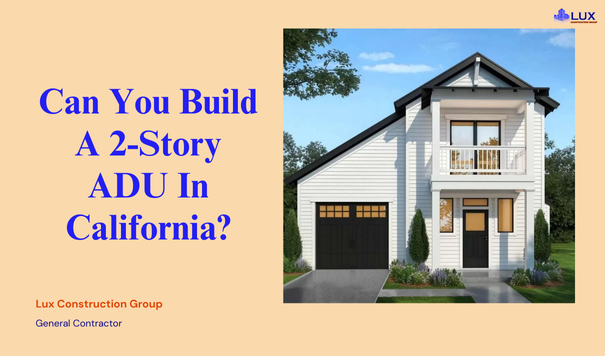
Los Angeles allows certain 2-story ADUs if height and setback rules are met. A Tiny Home on Wheels cannot be approved as a 2-story ADU. See: 2-story ADU regulations.
Is converting a garage into an ADU cheaper than installing a Tiny Home?
Garage conversions often cost less than detached ADUs but more than a THOW. However, a permitted garage ADU qualifies as real property. See: Garage conversion ADU services.
Ready to Build a Legal ADU in Los Angeles?
If you are considering a permitted, code-compliant ADU that increases property value and rental income potential, explore:
👉ADU Construction in Los Angeles
👉Garage Conversion ADU Services
LuxDevLA handles design, permits, construction, and final inspection — ensuring your ADU meets all Los Angeles zoning and residential code requirements.