Last Updated on March 20, 2026
Most structural failures in low-rise construction don’t happen because of bad design—they happen because the wrong wall system was chosen for the load, soil, or usage.
Masonry is still one of the most reliable wall systems available. But choosing between brick, AAC, hollow blocks, or stone isn’t just about cost—it directly affects structural load, thermal performance, and long-term maintenance.
What Masonry Walls Actually Are?
A masonry wall is built by stacking units like bricks, stones, or concrete blocks and bonding them with mortar.
That sounds simple. The real difference lies here:
- The unit type controls strength and weight
- The mortar composition affects bonding and durability
- The wall design determines whether it carries structural load
Typical materials used:
- Burnt clay bricks
- Concrete blocks (solid or hollow)
- AAC (Autoclaved Aerated Concrete) blocks
- Natural stone
Mortar is not just cement. It usually combines lime, sand, and binding agents to improve flexibility and crack resistance—especially important in regions with temperature variation.
Why Masonry is Still Used (Even in Modern Construction)
Steel and framed structures dominate large buildings, but masonry hasn’t disappeared. It solves problems that framed systems don’t handle well.
Where Masonry Still Wins
- Fire resistance: Masonry is non-combustible
- Thermal mass: Slows heat transfer → better indoor stability
- Pest resistance: No termite damage (unlike wood framing)
- Compressive strength: Handles vertical loads effectively
Example:
A commercial kitchen or medical facility often prefers masonry partitions because they handle heat, moisture, and wear better than drywall systems.
Contents
- What are the Main Types of Masonry Walls?
- What Materials Are Used in Masonry Wall Construction?
- How Do Masonry Walls Work Structurally?
- What is the Standard Thickness of Masonry Walls?
- How Do You Choose the Right Type of Masonry Wall?
- How Do Masonry Walls Compare With Other Wall Systems?
- What are Common Misconceptions About Masonry Walls?
- What Should Los Angeles Property Owners Know About Masonry Walls?
- Need Help With a Masonry Wall Project?
- Masonry Wall Types FAQs
What are the Main Types of Masonry Walls?
Masonry walls are classified based on how they carry loads, whether they include reinforcement, and how they interact with the structural frame.
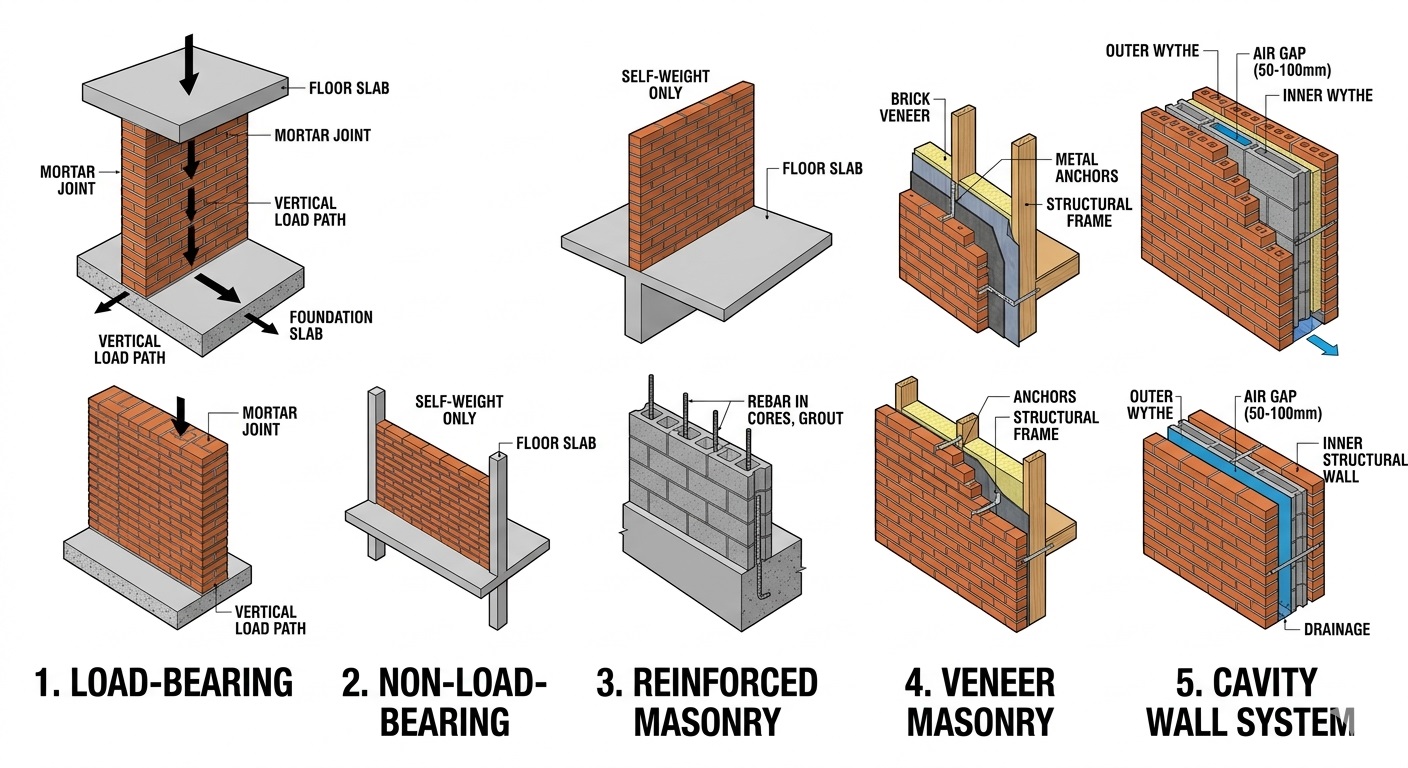
Each masonry type serves a unique structural or protective purpose.
There are 5 main types of masonry walls:
- Load-bearing masonry walls
- Non-load-bearing masonry walls
- Reinforced masonry walls
- Veneer masonry walls
- Cavity wall systems
Let’s explore each in detail:
1. Load-Bearing Masonry Walls
Load-bearing masonry walls support vertical loads from slabs, beams, and roofs and transfer them directly to the foundation.
Key points:
- Structural element (no separate frame required)
- Common materials: brick, concrete block, stone
- Typical thickness: 200–300 mm
- Works mainly in compression
Used in:
- Low-rise residential buildings
- Traditional construction systems
Limitation:
- Limited height due to weight and structural capacity
2. Non-Load-Bearing Masonry Walls
Non-load-bearing masonry walls do not carry structural loads and are used to divide spaces.
Key points:
- Carry only self-weight
- Thickness: 100–150 mm
- Installed within RCC or steel frames
Used in:
- Interior partitions
- Infill walls in framed buildings
Benefit:
- Lower cost and easier modification
3. Reinforced Masonry Walls
Reinforced masonry walls include steel reinforcement to increase strength and resistance to lateral forces.
How it works:
- Vertical bars inside hollow units
- Horizontal reinforcement in mortar joints
Key points:
- Higher load capacity than plain masonry
- Better performance under seismic forces
- Reduced cracking
Used in:
- Multi-storey buildings
- Seismic regions
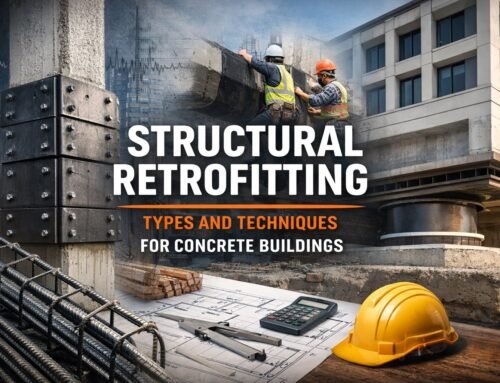
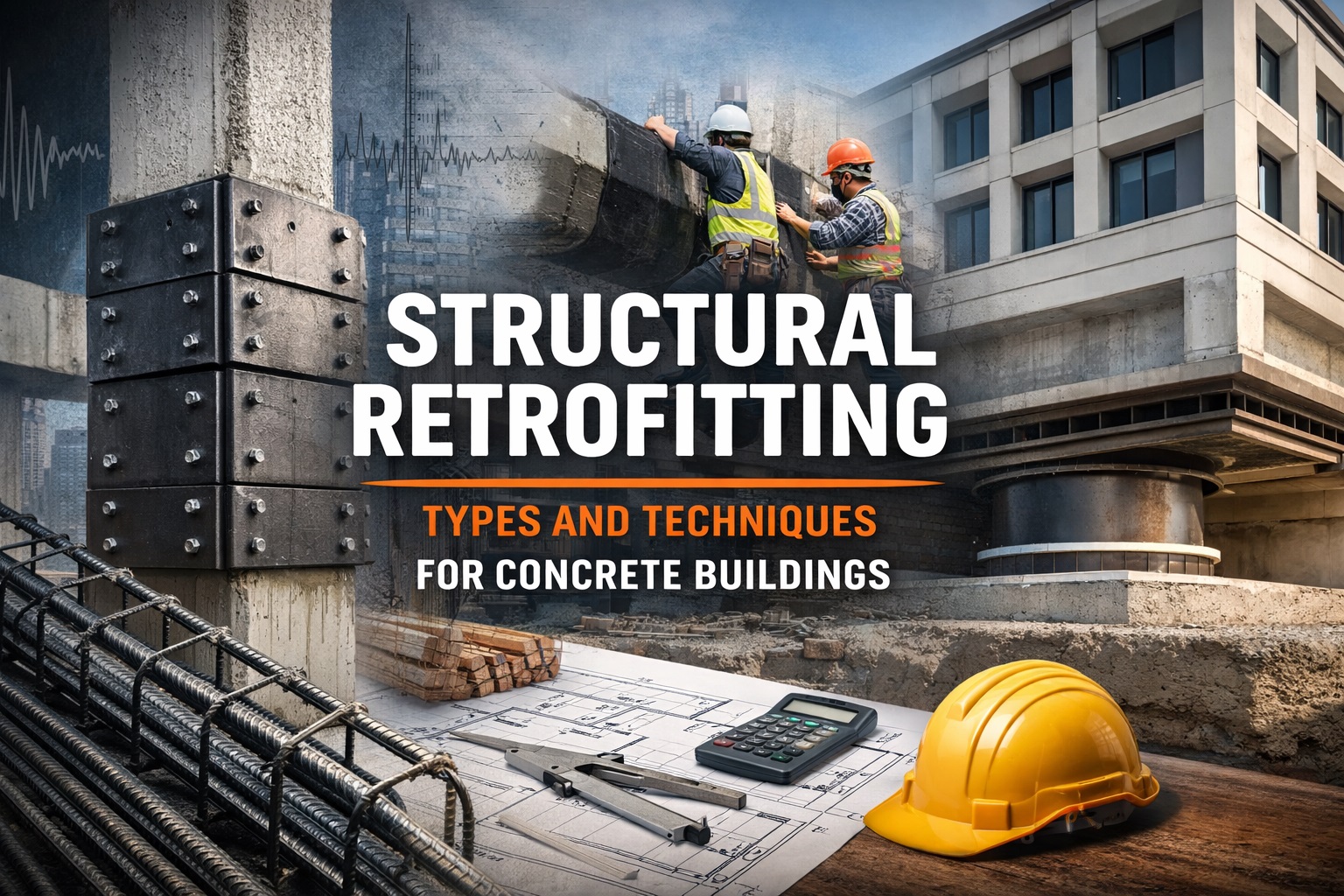
Reinforcement becomes critical when upgrading older buildings, especially in cases involving unreinforced masonry seismic retrofit, where structural stability needs to be improved.
4. Veneer Masonry Walls
Veneer masonry walls are non-structural outer layers attached to a structural frame.
Key points:
- Do not carry load
- Typically one layer thick
- Anchored to concrete or steel frame
Used in:
- Building facades
- Exterior finishes
Advantage:
- Achieves masonry appearance with lower weight and cost
5. Cavity Wall Masonry Systems
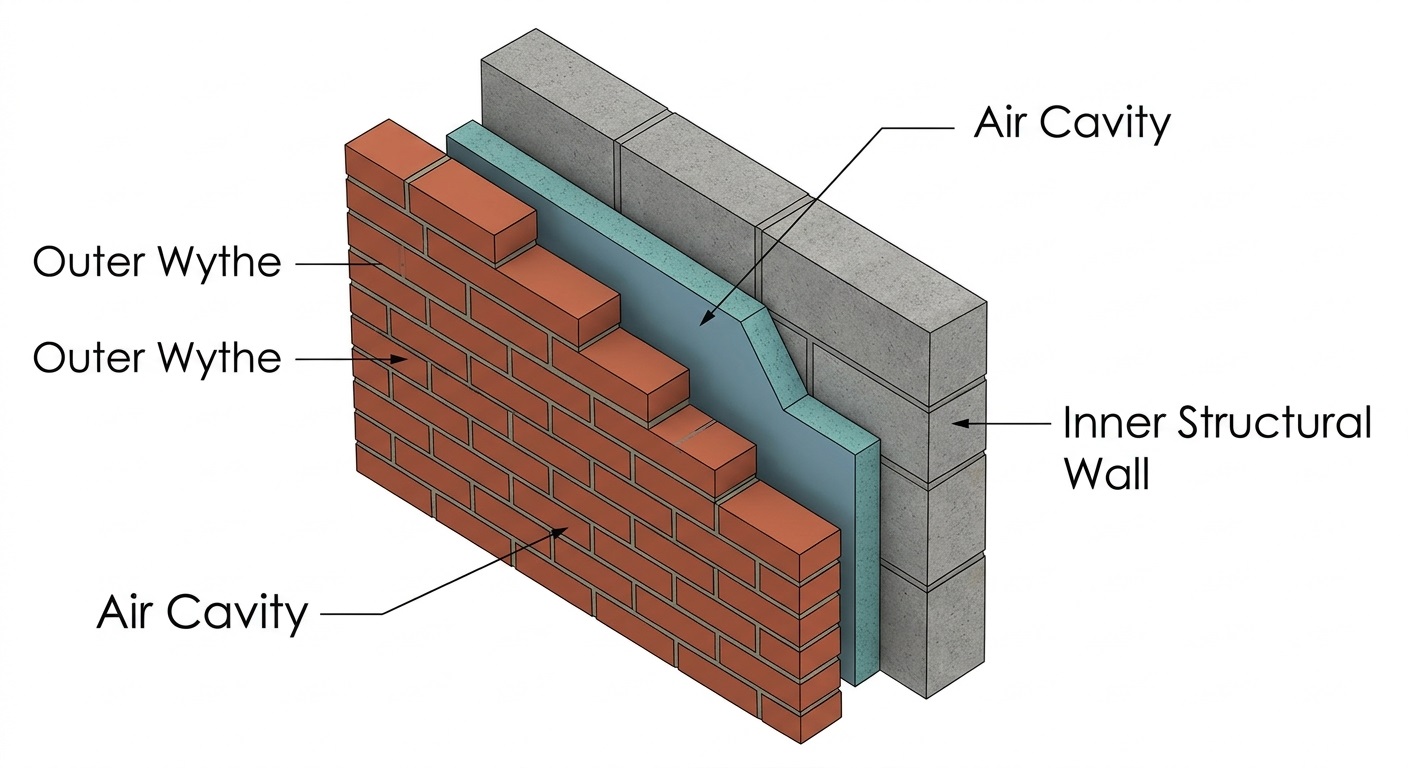
The cavity wall system creates a “dead air” space that blocks moisture and improves thermal performance.
Cavity walls consist of two masonry layers separated by a gap to control moisture and improve insulation.
Structure:
- Outer wall → weather barrier
- Inner wall → structural support
- Cavity → prevents water penetration
Typical cavity width:
- 50–100 mm
Benefits:
- Better thermal performance
- Reduced dampness
Key Takeaways
- Classification depends on structural role and reinforcement
Load-bearing and reinforced walls handle structural loads - Veneer and cavity walls improve performance without carrying loads
- Selection depends on building type, height, and environmental conditions
Different wall types rely on different materials, which directly affect strength, cost, and durability.
What Materials Are Used in Masonry Wall Construction?
Masonry walls in the United States are built using bricks, concrete masonry units (CMUs), natural stone, or lightweight blocks, bonded with mortar to form structural or non-structural systems.
Material selection affects strength, code compliance, cost, and energy performance.
1. Brick Masonry Walls
Brick masonry uses fired clay bricks bonded with mortar to create durable wall systems.
Key properties:
- Standard modular size: 7 5/8″ × 3 5/8″ × 2 1/4″ (nominal with mortar: 8″ × 4″ × 2 2/3″)
- Compressive strength: 3,000–10,000 psi
- High fire resistance
Used in:
- Residential construction
- Veneer and low-rise load-bearing walls
Advantages:
- Long service life
- Low maintenance
- Consistent dimensions
2. Concrete Block Masonry Walls (CMU)
Concrete masonry units (CMUs) are the most widely used masonry material in U.S. commercial and structural construction.
Types:
- Solid CMU → higher density and strength
- Hollow CMU → allows reinforcement and grout
Standard size:
- 16″ × 8″ × 8″ (nominal)
Key properties:
- Compressive strength: 1,900–3,500 psi
- Compatible with reinforced masonry systems
- Faster installation due to larger unit size
CMU walls are commonly used in reinforced structural systems. For deeper context, see types of concrete blocks used in construction.
3. Stone Masonry Walls
Stone masonry uses natural stone units bonded with mortar, typically for structural or architectural applications.
Types:
- Rubble masonry (irregular stones)
- Ashlar masonry (cut and finished stones)
Key properties:
- Very high compressive strength
- Excellent durability
- High cost and labor requirement
Used in:
- Retaining walls
- Exterior facades
- Institutional and historic buildings
4. AAC and Lightweight Block Walls
AAC (Autoclaved Aerated Concrete) and lightweight block systems are used where reduced weight and improved insulation are required.
Key properties:
- Density: 30–50 lb/ft³
- Higher thermal insulation than standard CMU
- Larger units improve installation speed
Used in:
- Partition walls
- Energy-efficient building systems
Note:
- Less common than CMU in structural applications
Key Takeaways
- CMU dominates structural masonry in U.S. construction
- Brick is widely used for residential and veneer systems
- Stone is selected for durability and architectural value
- Lightweight blocks reduce structural load and improve insulation
Material choice directly affects how masonry walls transfer loads, resist moisture, and perform over time.
How Do Masonry Walls Work Structurally?
Masonry walls work by transferring loads through compression, using units and mortar together as a single system.
Their performance depends on bonding, load paths, and interaction with structural frames.
How Mortar Bonds Masonry Units
Mortar binds individual units (brick, CMU, stone) into a continuous wall that can distribute loads evenly.
Functions of mortar:
- Bonds units into a single structural element
- Accommodates minor movement and irregularities
- Seals joints to reduce air and moisture penetration
Typical joint thickness:
- 3/8 inch (standard in U.S. construction)
Key point:
- Mortar is weaker than masonry units, which allows controlled cracking instead of sudden failure
How Masonry Walls Transfer Loads
Masonry walls transfer loads vertically through compression and, when reinforced, can resist lateral forces.
Load transfer path:
- Roof or slab applies load
- Load moves through masonry wall
- Wall transfers load to foundation
Structural behavior:
- Strong in compression
- Weak in tension without reinforcement
With reinforcement:
- Steel bars resist tension and bending forces
- Improves performance under wind and seismic loads
This is why reinforced systems are required in seismic regions, especially when upgrading older structures through unreinforced masonry seismic retrofit.
How Masonry Connects With Concrete or Steel Frames
In modern construction, masonry walls often work with reinforced concrete or steel frames instead of acting as primary structural elements.
Two common systems:
1. Infill Walls
- Masonry placed within a structural frame
- Does not carry primary structural loads
- Acts as partition or enclosure
2. Composite Systems
- Masonry combined with reinforced concrete elements
- Shares load depending on design
Key considerations:
- Proper anchoring prevents separation
- Movement joints reduce cracking
- Frame carries most structural load in high-rise buildings
👉 Related structural system context: shear wall systems and their structural role
Wall behavior directly influences required thickness, which varies based on load, height, and building type.
What is the Standard Thickness of Masonry Walls?
Masonry wall thickness depends on structural role, material type, and building height. In U.S. construction, thickness is defined using nominal dimensions (including mortar joints).
Typical Masonry Wall Thickness (inches)
Common masonry wall thicknesses used in practice:
| Wall Type | Typical Thickness | Use Case |
| Partition wall | 4″ (nominal) | Interior non-load-bearing walls |
| Standard wall | 6″–8″ | Residential and light commercial |
| Structural wall | 8″–12″ | Load-bearing and reinforced walls |
| Heavy-duty wall | 12″+ | High loads or retaining structures |
Key point:
- Thickness increases with load, height, and reinforcement requirements
Brick Wall Types (Wythe-Based Thickness)
Brick walls are classified based on the number of wythes (vertical layers of bricks).
| Type | Thickness | Description |
| Single wythe | ~4″ | Used in veneer or partitions |
| Double wythe | ~8″ | Common in structural brick walls |
| Triple wythe | ~12″ | Used for higher load capacity |
Key point:
- Each additional wythe increases strength and stability
Nominal vs Actual Thickness
Masonry dimensions are expressed as nominal sizes, which include mortar joints.
Example:
- Nominal CMU size: 8″ × 8″ × 16″
- Actual block size: 7 5/8″ × 7 5/8″ × 15 5/8″
Why this matters:
- Architectural drawings use nominal dimensions
- Actual construction dimensions are slightly smaller
- Mortar joints (typically 3/8″) complete the final size
Wall thickness must align with structural requirements, cost considerations, and environmental conditions.
How Do You Choose the Right Type of Masonry Wall?
The right masonry wall type depends on load requirements, cost, environmental conditions, and building use.
Each factor directly affects performance, safety, and long-term maintenance.
Structural Load Requirements
Wall selection starts with load type and magnitude.
- Load-bearing walls → support vertical loads (low-rise buildings)
- Reinforced masonry → required for lateral loads (wind, seismic)
- Non-load-bearing walls → used only for partitions
Key point:
- Taller buildings and seismic zones require reinforced systems, not plain masonry
Cost vs Lifecycle Performance
Initial cost and long-term performance vary by material and system.
| Wall Type | Initial Cost | Maintenance | Lifespan |
| Brick | Medium | Low | 50–100+ years |
| CMU | Low–Medium | Low | 50–100+ years |
| Stone | High | Very low | 75–150+ years |
| Veneer | Lower | Medium | Depends on backing system |
Key point:
- Lower upfront cost (CMU) often provides better cost-to-performance ratio in commercial construction
Climate and Moisture Exposure
Environmental conditions influence wall type and system design.
- Cavity walls → reduce water penetration in wet climates
- AAC/lightweight blocks → improve insulation in temperature extremes
- Dense materials (brick, stone) → better durability in harsh weather
Key point:
- Moisture control is critical for exterior walls
Seismic Conditions and Reinforcement Needs
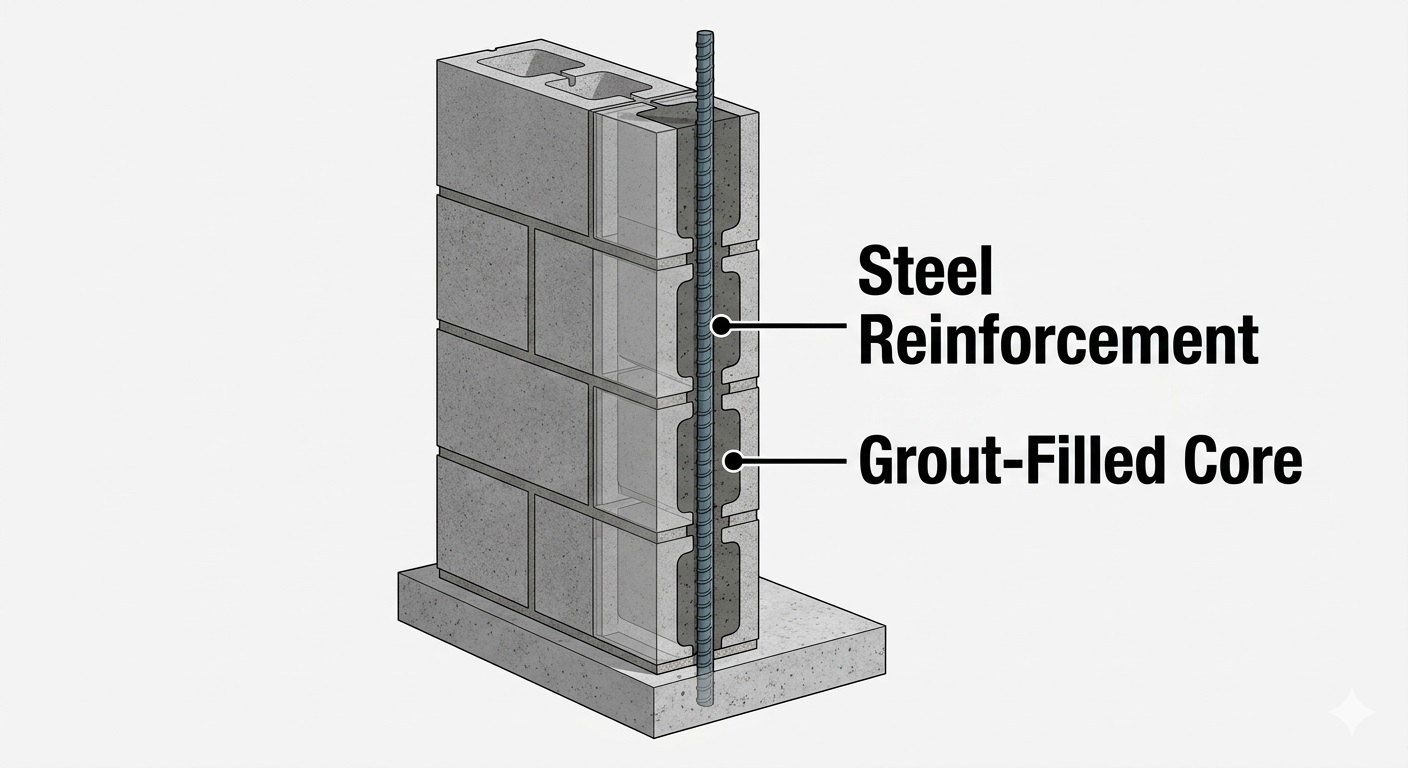
Reinforcement transforms brittle masonry into a resilient system capable of resisting earthquake forces.
Seismic risk determines whether reinforcement is required.
- Reinforced masonry → standard in earthquake-prone areas
- Unreinforced masonry → vulnerable to failure under lateral forces
Older buildings often require upgrades through unreinforced masonry seismic retrofit to meet safety standards.
Residential vs Commercial Applications
Wall selection differs based on building type:
Residential:
- Brick veneer or CMU
- Load-bearing walls in low-rise construction
Commercial:
- Reinforced CMU systems
- Integration with concrete or steel frames
For broader structural comparisons, see brick vs concrete vs wood construction
Key Takeaways
- Choose wall type based on load, environment, and building use
- Reinforcement is required for seismic and lateral loads
- CMU provides cost-efficient structural performance
- Cavity and veneer systems improve moisture and thermal performance
Wall selection also depends on how masonry compares with other wall systems like drywall and concrete framing.
How Do Masonry Walls Compare With Other Wall Systems?
Masonry walls differ from drywall and concrete systems in strength, cost, installation speed, and structural role.
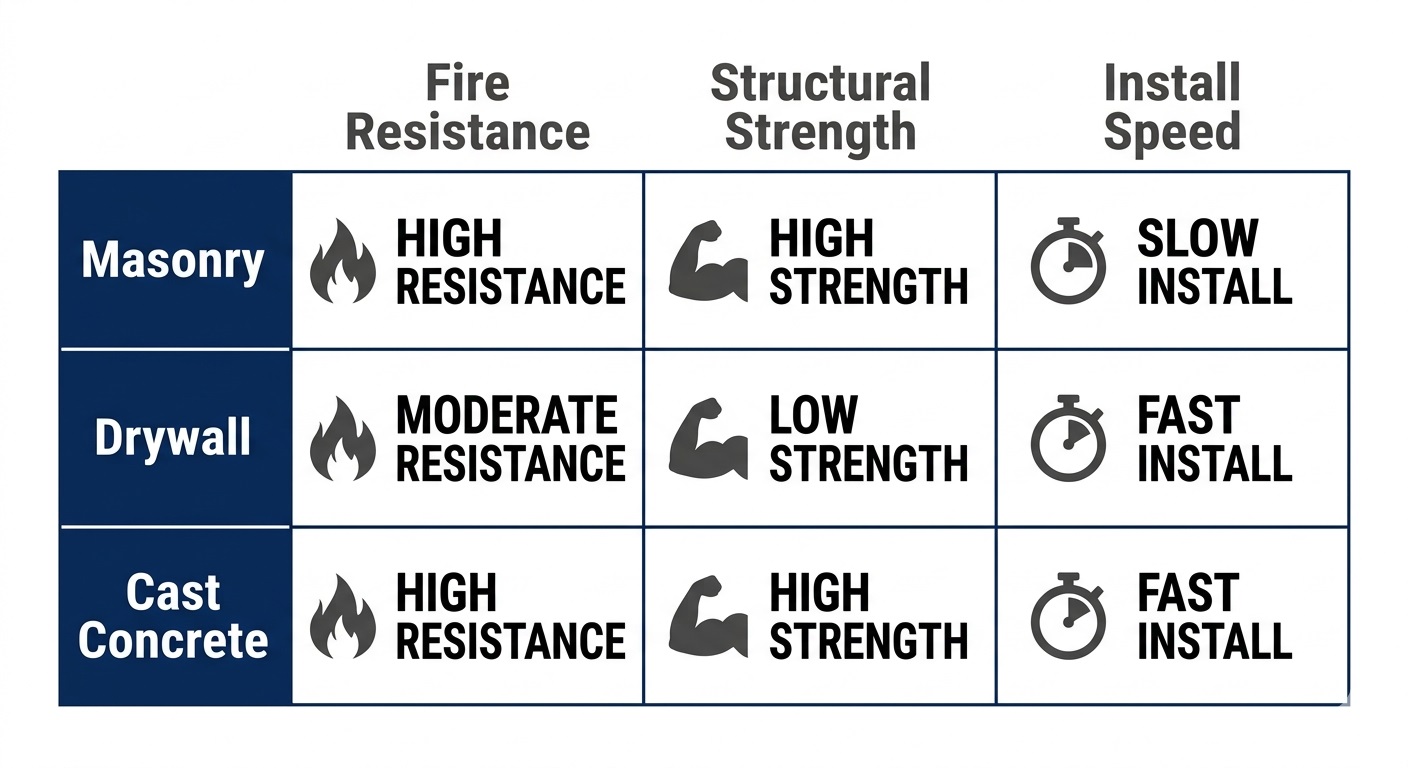
Masonry offers a unique balance of extreme durability and high fire resistance compared to lighter systems.
Masonry Walls vs Drywall
Masonry walls are structural or semi-structural, while drywall is a non-structural interior system.
| Feature | Masonry Wall | Drywall |
| Structural role | Can be load-bearing | Non-structural only |
| Strength | High | Low |
| Fire resistance | High | Moderate |
| Installation | Slow | Fast |
| Cost | Higher | Lower |
Key point:
- Drywall is used for interior partitions only
- Masonry is used where strength and durability are required
Masonry Walls vs Concrete Wall Systems
Both systems are structural, but differ in construction method and performance.
| Feature | Masonry (Brick/CMU) | Cast-in-Place Concrete |
| Construction | Unit-based | Monolithic pour |
| Speed | Moderate | Fast (with formwork) |
| Reinforcement | Optional/partial | Fully reinforced |
| Flexibility | Easier modifications | Harder to modify |
| Cost | Lower for small projects | Efficient for large structures |
Key point:
- Masonry is common in low- to mid-rise buildings
- Concrete systems dominate high-rise and heavy-load structures
When Masonry is Not the Right Choice?
Masonry is not suitable in certain conditions:
- High-rise buildings → excessive weight
- Fast-track projects → slower construction speed
- Poor soil conditions → higher dead load increases foundation demand
- Highly seismic areas without reinforcement → risk of brittle failure
Understanding these differences helps clarify common misconceptions about masonry performance and limitations.
What are Common Misconceptions About Masonry Walls?
1. “Masonry Is Always Stronger”
Masonry is strong in compression but weak in tension.
What is true:
- High compressive strength → supports vertical loads effectively
Durable under normal conditions
What is not true:
- Cannot resist tension or bending without reinforcement
- Brittle failure can occur under lateral loads
Key point:
- Strength depends on design, reinforcement, and load type, not just material
2. Earthquake Performance Reality
Unreinforced masonry performs poorly in earthquakes due to low ductility.
Why failures occur:
- Walls cannot absorb lateral movement
- Cracking leads to sudden collapse
What improves performance:
- Reinforced masonry (steel + grout)
- Proper anchoring to floors and roofs
- Compliance with seismic codes
Older buildings often require upgrades through unreinforced masonry seismic retrofit to improve safety.
Local building codes and seismic requirements play a major role in how masonry walls are designed and approved.
What Should Los Angeles Property Owners Know About Masonry Walls?
Masonry construction in Los Angeles is governed by strict seismic codes due to high earthquake risk.
Wall type, reinforcement, and anchorage must comply with local regulations.
Seismic Design and Retrofitting Requirements
Los Angeles requires masonry walls to meet seismic performance standards, especially for older buildings.
Key requirements:
- Reinforced masonry for new construction
- Anchorage of walls to floors and roofs
- Lateral load resistance for earthquake forces
High-risk category:
- Unreinforced masonry (URM) buildings built before modern codes
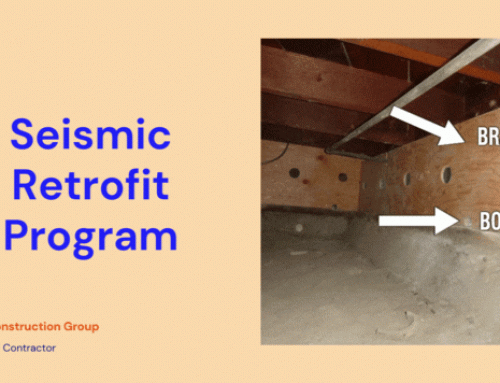
These buildings must be upgraded through unreinforced masonry seismic retrofit to prevent collapse during earthquakes.
Common retrofit methods:
- Adding steel reinforcement
- Installing wall anchors and braces
- Strengthening connections to diaphragms
Permits and Structural Compliance
Masonry work in Los Angeles requires permits and structural review.
Typical approval process:
- Structural design based on California Building Code (CBC)
- Plan check by city authorities
- Permit issuance before construction
- Inspection during and after construction
Key compliance factors:
- Wall thickness and reinforcement details
- Load calculations and seismic resistance
- Material specifications (CMU, mortar, grout)
For broader requirements, see California earthquake retrofit requirements.
Masonry wall performance depends on correct design, material selection, and compliance with structural requirements across all stages of construction.
Need Help With a Masonry Wall Project?
Get clarity before you build, repair, or retrofit.
- Identify the correct masonry wall type for your structure
- Determine if seismic retrofit is required
- Verify code compliance for Los Angeles
- Receive a professional structural assessment
Request a masonry inspection or retrofit consultation
For related services and project support, explore construction and remodeling services
Masonry Wall Types FAQs
What is the lifespan of a masonry wall?
Masonry walls last 50–100+ years depending on material, maintenance, and exposure. Brick and CMU walls resist weathering, while proper mortar maintenance extends service life and prevents structural deterioration.
Do masonry walls require maintenance?
Masonry walls require periodic maintenance such as repointing mortar joints every 25–50 years, sealing cracks, and checking moisture intrusion to maintain structural integrity and durability.
Are masonry walls energy efficient?
Masonry walls improve energy efficiency through thermal mass, which stabilizes indoor temperatures. Insulated CMU and cavity walls increase R-value and reduce heating and cooling loads.
Can masonry walls be insulated?
Masonry walls can be insulated using rigid foam, cavity insulation, or insulated CMUs, which improve thermal performance and meet U.S. energy codes such as IECC requirements.
How long does it take to build a masonry wall?
Masonry wall construction takes 2–5 days for small walls and several weeks for larger structures, depending on wall type, labor, weather, and curing time of mortar.