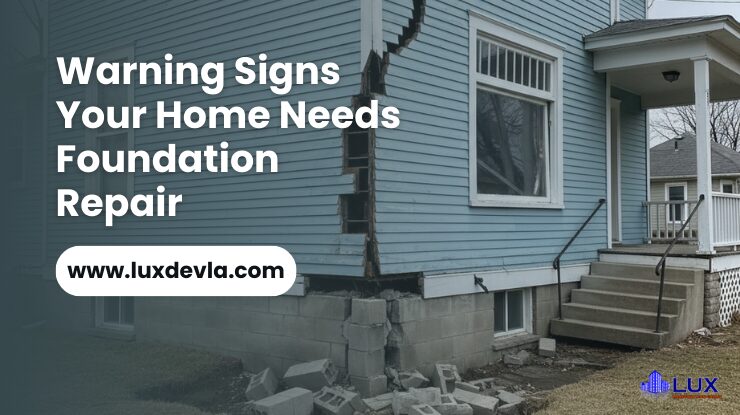
Have you noticed small wall cracks or sticking doors and wondered if they mean something more serious?
These small issues might be early signs that your home’s foundation is shifting or weakening.
The foundation is what holds everything in place — when it moves, your home’s structure can suffer.
In fact, about 1 in 4 homes in the U.S. deal with structural damage in their lifetime, and foundation problems account for over 80% of structural home insurance claims. [Source]
Foundation damage doesn’t just affect walls or floors. It can also cause plumbing issues, roof problems, and even lower your home’s value if not fixed early.
Key Takeaways – Foundation Repair Warning Signs and Solutions
- Catch foundation problems early by looking for cracks, sticking doors, uneven floors, or sloping surfaces inside your home.
- Exterior signs like chimney separation, stair-step cracks in brick, and gaps near garages reveal deeper foundation movement.
- Los Angeles homes are more vulnerable due to clay soil, seismic activity, and hillside construction.
- Delaying repairs increases costs, risks damage to plumbing and roofing, and affects resale value.
- Lux Construction Group in Los Angeles provides expert inspections and engineered repair solutions that protect your home’s value and design integrity.
These risks are higher in areas like Los Angeles, where the soil expands and contracts with the seasons, and small earthquakes are common. That’s why it’s important to catch warning signs early.
At LUX Construction, we help homeowners spot signs that their home needs foundation repair before the damage worsens — protecting both individuals’ safety and property value.
Next, we’ll show you how to recognize common foundation warning signs inside your home — so you know what to watch out for before problems grow.
What are the Most Common Interior Signs of Foundation Problems?

When a home’s foundation begins to shift or settle, the first clues often show up inside your living space — long before major structural damage becomes obvious.
Understanding these interior signals lets you act early and potentially save thousands on repair costs.
-
Look for Doors and Windows That Stick or Shift
One of the most noticeable early warning signs is when doors or windows suddenly start to stick, jam, or fail to close smoothly.
This happens because foundation movement shifts the framing of your home, which changes the alignment of door and window openings.
If you notice gaps around the frame, doors that swing open on their own, or windows that don’t latch correctly, it may be due to foundation settlement rather than simple humidity or wear.
-
Watch for Diagonal Cracks on Interior Walls
Cracks in drywall or plaster, especially diagonal cracks near doorways or windows, are classic indicators of foundation-related movement.
These cracks occur when portions of the home settle at different rates, placing stress on interior finishes. While small hairline cracks can sometimes be cosmetic, cracks that grow wider over time or appear in multiple locations warrant professional evaluation.
-
Check for Sloping or Bouncy Floors
If a floor that was once level now feels slanted, bouncy, or uneven underfoot, this is a significant sign of foundation settlement. Some homeowners even notice that a ball rolls across the floor without being pushed — a subtle but telling cue that the subfloor or slab has shifted.
-
Inspect Ceilings and Wall Joints for Cracks
Cracks that appear on ceilings or where walls meet can also signal underlying foundation movement.
As the home’s structure shifts, it places stress on horizontal surfaces, and these stress points can manifest as cracks or separations along ceiling lines or at corners.
These interior warning signs often appear well before more dramatic exterior symptoms. Early detection not only improves your ability to preserve structural integrity but also helps guide the right type of foundation assessment and optimized repair planning.
Identify Exterior Warning Signs of Foundation Issues

Exterior symptoms often reflect how the structure interacts with soil, moisture, and environmental forces — and they can reveal deeper foundation problems that haven’t yet shown up inside. These signs are distinct from interior cues and are equally important for early detection.
-
Look for Horizontal or Stair-Step Cracks in Exterior Walls
Horizontal cracks or “stair‑step” patterns in exterior brick or stucco suggest that lateral pressure or uneven settlement has shifted the home’s load.
Unlike tiny surface cracks from normal settling, these irregular patterns indicate stress moving through exterior finishes and toward the structural core.
-
Check for Leaning or Separating Chimneys
A chimney that begins to tilt or gap away from the house frame is rarely a cosmetic issue. Because chimneys have their own footings and loads, separation can signal differential movement between structural elements — a situation often linked to foundation displacement rather than normal wear.
-
Spot Gaps Around Garage Frames
When the ground, slab, or wall near a garage door begins to pull away or create noticeable gaps, it typically means that the foundation or slab supporting that area is shifting differently from the rest of the house.
These gaps are not just aesthetic issues; they reveal underlying movement that needs evaluation by a structural expert.
-
Watch for Expanding Cracks in Foundation Walls
Wide or expanding cracks in the foundation stem wall — especially those that run horizontally or widen over time — often show that soil pressure or moisture imbalance is pushing against the foundation.
This is a stronger signal of structural concern than random, narrow cracks, which may be surface-level.
These exterior signs, when observed with interior symptoms, point to movement patterns that go beyond normal wear and tear. Identifying them early improves the chances of effective intervention and tailored repair planning.
Now that we’ve covered the visible signs of foundation damage both inside and outside your home, it’s important to understand why some properties — especially in Southern California are more vulnerable than others. Local soil, climate, and geography can all play a major role in how and when foundation problems begin.
Understand Why Los Angeles Homes Face More Foundation Problems
Homes in Los Angeles face unique structural risks due to a combination of natural geology, climate cycles, and seismic activity — all of which affect how stable the ground beneath a home really is.
-
Clay Soil and Weather Cycles Cause Foundation Stress
Large parts of the Los Angeles basin are built on clay-rich soil, which is highly reactive to moisture changes.
During dry months, this soil contracts. In wet seasons, it expands again. This constant shrink-swell cycle puts enormous pressure on slab and pier foundations, often causing them to shift, tilt, or crack over time.
This phenomenon is common in older neighborhoods with shallow footings or poorly compacted fill.
-
Small Earthquakes Weaken Foundation Stability Over Time
While large earthquakes get attention, it’s actually the frequent, low-magnitude tremors that cause long-term stress on residential foundations.
These vibrations gradually loosen soil, degrade structural bonds, and weaken foundation stability over time, especially if the structure isn’t retrofitted.
According to the study, Southern California experiences thousands of small tremors each year — and their cumulative effect shouldn’t be underestimated. (earthquake.usgs.gov)
-
Homes on Slopes Are Prone to Foundation Movement
Many luxury homes in Los Angeles are built on slopes, hills, or engineered pads — but gravity is always working against these structures.
Slope creep, erosion, and poor water drainage increase the chance of lateral pressure on foundation walls. Homes without proper caissons, grade beams, or retaining systems are particularly vulnerable. If hillside soil isn’t properly stabilized, it can drag foundations downslope over time.
These local conditions aren’t just environmental facts — they’re ongoing structural challenges that every Los Angeles homeowner should take seriously.
Recognizing how these risks interact with your property is the first step to preventing long-term damage.
Understanding why foundation issues happen in Los Angeles is only part of the story — the real impact comes when these warning signs are ignored.
Next, look at what’s at stake if foundation repairs are delayed, and why acting sooner is always the smarter, safer option.
Delaying Foundation Repair Increases Risk and Cost
Delaying foundation repairs doesn’t just give problems time to grow — it often leads to cascading damage, higher repair costs, and major safety risks. While the issues may start small, waiting too long can turn a manageable fix into a financial and structural disaster.
-
Foundation Repair Becomes Costlier the Longer You Wait
Foundation issues rarely stay the same. A minor crack or shift today could lead to structural re-leveling, underpinning, or pier installation later — all of which are more expensive and labor-intensive.
-
Undisclosed Foundation Damage Hurts Home Sales
In California, home sellers are required by law to disclose known foundation problems. If you delay repair, it’s not just a construction issue — it becomes a real estate liability. A damaged foundation can scare off buyers, reduce your property’s appraisal value, or force costly retroactive repairs during escrow.
As the foundation shifts, it affects connected systems. Pipes can rupture, leading to leaks or flooding. Roof framing can misalign, causing sagging or leaks. Doors and windows may warp beyond repair. What started as a hidden issue in the ground can spread throughout your home’s systems.
-
Weak Foundations Increase Earthquake Damage Risk
Los Angeles is in an active seismic zone. If your foundation is already compromised, an earthquake — even a minor one — could cause significant structural failure. Delayed repairs mean your home is more likely to suffer serious damage during natural disasters.
Every month that passes with an unresolved foundation problem increases the risk and the cost. Acting quickly means less disruption, lower expenses, and better protection for your home.
How Does Lux Construction Group Protect Your Home’s Foundation?
When it comes to foundation stability, every home is different — and that’s why cookie-cutter repairs simply don’t work. As a leading remodeling expert in Los Angeles, we use a precision-engineered approach for luxury homes, hillside properties, and high-value estates across the Los Angeles region.
Our process focuses on long-term structural performance without compromising the aesthetic integrity of your home.
-
Our Experts Perform Detailed Foundation Inspections
Our process begins with a detailed inspection, far beyond a basic visual check. We use laser levels, elevation surveys, and subsurface testing to understand not just the damage but its cause.
This helps us to recommend targeted solutions instead of generic fixes, reducing waste, disruption, and cost.
-
We Design Repairs for Complex and High-Value Homes
Depending on what your home needs, we may use underpinning systems, steel piers, concrete caissons, or slab leveling technologies. Every repair is engineered to handle both soil movement and long-term load requirements — ideal for LA’s seismic, clay-rich environment.
-
We Preserve Luxury Finishes While Repairing Foundations
Unlike standard contractors, Lux Construction Group is trained to work with high-end interior and exterior finishes. Our methods are minimally invasive where possible and tailored to protect architectural value.
Whether your home features imported tile, fine millwork, or custom landscaping, our technicians ensure repairs are seamless and discreet.
Whether you’re dealing with early warning signs or visible structural movement, LUX Construction delivers customized solutions for signs your home needs foundation repair — ensuring your property stays strong, safe, and beautiful for decades to come.
If you’ve noticed any of the signs we’ve covered — or even if you just suspect something’s not right, it’s time to act.
At LUX Construction, we offer professional consultations backed by engineering expertise, cutting-edge repair methods, and a commitment to high-end service quality.
Think your home may be settling? Don’t wait until it’s too late.
Call us at (424) 248-5090, or write to us at Info@LuxDevLA.com today for a foundation inspection and protect what matters most — your home’s future.
Foundation Repair FAQs for Los Angeles Homeowners
How much does foundation repair cost in Los Angeles?
Foundation repair in Los Angeles typically costs $5,000–$15,000, depending on severity, home size, and soil type. Deeper repairs like underpinning or caisson installation may exceed $25,000.
Can a home inspection detect foundation problems before buying a house?
Yes, certified home inspectors can identify early foundation issues, but a structural engineer offers more accurate diagnostics for hidden damage.
What is the difference between foundation settling and foundation failure?
Foundation settling is normal soil compression over time; failure involves active structural damage like wide cracks or unlevel floors.
Is foundation repair covered by homeowners’ insurance in California?
Most policies do not cover foundation repair unless damage is caused by a covered event like plumbing failure or natural disaster.
What’s the best time of year to schedule foundation repair in Southern California?
Late summer to early fall is ideal, when soil moisture is stable, and contractors have better availability for assessments and work.