What are the Main Soft-Story Seismic Retrofitting Techniques in California?
The main soft-story seismic retrofitting techniques used in California are plywood shear walls, steel moment frames, braced frames, grade beams, footings, foundation anchorage, collector elements, drag struts, and diaphragm connections. These systems strengthen weak or open lower floors so the building can better resist side-to-side earthquake movement.
California’s earthquake risk makes this a structural safety issue, not just a code item. USGS estimates a greater than 99% chance of one or more magnitude 6.7 or larger earthquakes in California over a 30-year period and a 60% probability of a magnitude 6.7 earthquake in the Los Angeles region within 30 years. (USGS)
For most soft-story buildings, the first practical question is:
Does the ground floor need to stay open?
If parking spaces, garage bays, or storefront openings must remain usable, engineers often use steel moment frames because they add lateral strength without closing the open front. If the building has enough usable wall space, plywood shear walls may be a more cost-effective option.
For Los Angeles properties, retrofit planning should also account for local compliance. LADBS identifies vulnerable soft-story buildings as structures with two or more stories of wood-frame construction, built under code standards before January 1, 1978, and containing ground-floor parking or similar open floor space. The program does not apply to residential buildings with three or fewer units. (dbs.lacity.gov)
For related local requirements, review the city-focused guide to soft-story retrofit ordinance compliance in Los Angeles or the broader seismic earthquake retrofit service page.
Why Soft-Story Buildings Need Seismic Retrofitting
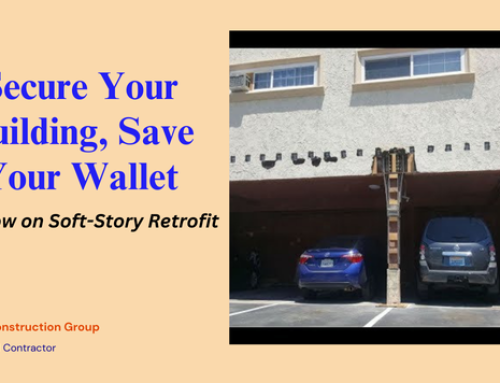
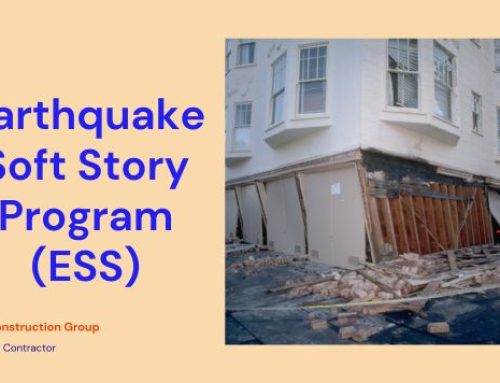
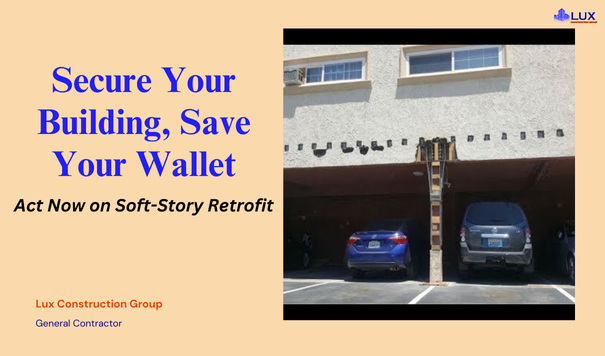
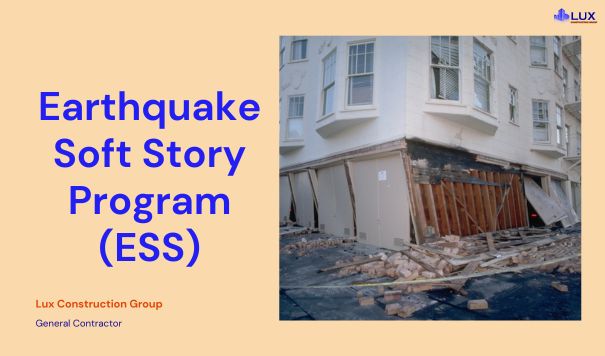
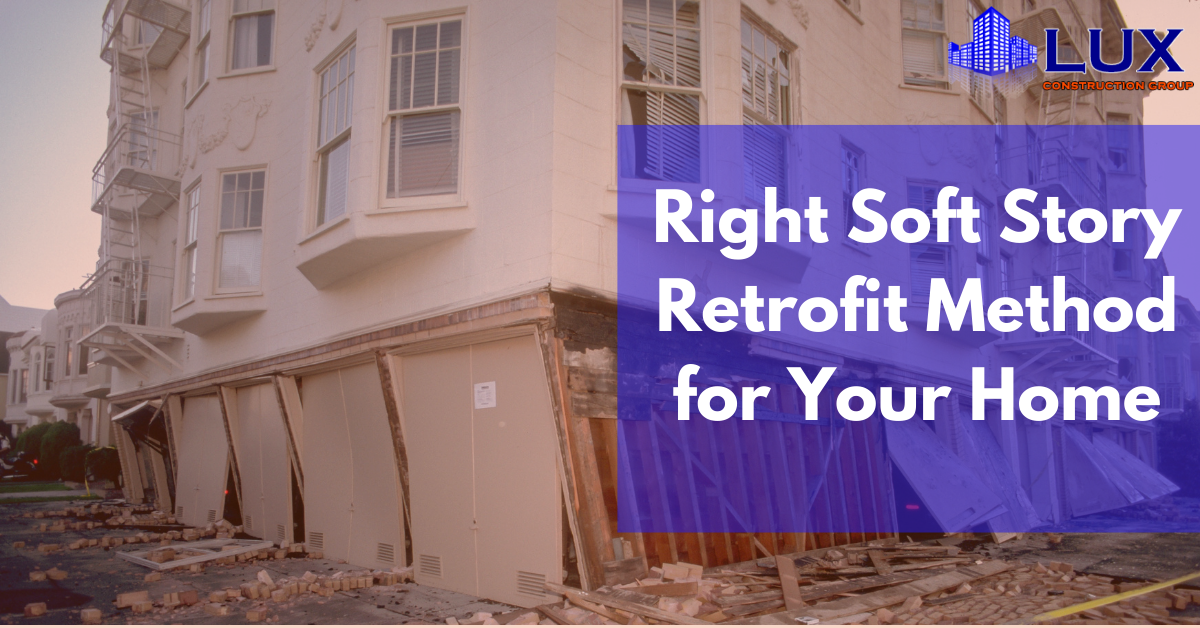
A soft-story building is vulnerable because the lower floor has less lateral strength than the floors above it. During an earthquake, the upper stories move with force, but the open or weakened first level may not have enough walls, columns, or bracing to resist that movement.
In many California apartment and mixed-use buildings, the first story was designed for access: parking stalls, garage doors, storefront glass, or open commercial frontage. Those openings can reduce the structural wall lines that would normally resist side-to-side movement.

The risk usually comes from three conditions:
- Low lateral stiffness: the first floor bends or sways more than the floors above it.
- Weak force transfer: earthquake loads do not move cleanly into the foundation.
- Concentrated damage: cracking, racking, or collapse begins at the open ground level.
The retrofit goal is not to make the building “earthquake-proof.” The goal is to reduce the chance of severe first-story failure by improving strength, stiffness, anchorage, and force transfer.
How Engineers Choose the Right Soft-Story Retrofit Method
The right retrofit method depends on where the building loses strength, how earthquake forces move through the structure, and whether the ground floor must remain open for parking, access, or storefront use.
In many Los Angeles soft-story projects, the visible issue is parking, but the engineering issue is force transfer. A building may have enough room for a steel frame, but that frame still needs the foundation, diaphragm, collectors, and anchorage to deliver earthquake loads into it.
1. Building Type and Framing System
Soft-story retrofit design starts with the building’s structural system. A wood-frame apartment building with tuck-under parking usually needs a different solution than a reinforced concrete building with weak columns.
A wood-frame building may be strengthened with plywood shear walls, steel moment frames, foundation anchorage, and collector connections. A reinforced concrete building may require column jacketing, FRP strengthening, or section enlargement if the weakness is inside the concrete members.
2. Ground-Floor Openings and Wall Availability
If the first floor has enough solid wall area, shear walls may provide an efficient way to increase lateral strength.
If the lower level has wide garage bays, tuck-under parking, or storefront openings, shear walls may block the function of the building. In those cases, engineers often consider steel moment frames or braced frames because they can strengthen open bays without fully closing them.
This is why two similar-looking buildings may need different retrofit methods. The deciding factor is not just the number of stories. It is how much usable wall area exists at the weak level.
3. Foundation Capacity and Load Path
A retrofit system has to transfer earthquake forces into the foundation. Adding a steel frame or shear wall is not enough if the foundation cannot receive and resist the load.
Engineers check whether the existing foundation can support new steel columns, shear wall anchorage, grade beams, footings, drag struts, collectors, uplift forces, and overturning forces.
This is where many retrofit designs become more complex than owners expect. The visible frame or wall may be only one part of the work. The hidden anchors, footings, and load-transfer elements often determine whether the retrofit performs properly.
4. Parking, Tenant, and Storefront Access
Soft-story retrofits must strengthen the building without unnecessarily damaging its use. A shear wall may be structurally effective but impractical if it removes parking spaces. A moment frame may cost more but preserve the open bay. A braced frame may provide strong resistance but interfere with doors, windows, or vehicle movement.
For buildings already facing compliance notices, planning should align with local ordinance requirements, permit review, and the scope of soft-story retrofit work in Los Angeles.
Primary Soft-Story Retrofit Techniques
The main soft-story retrofit techniques strengthen the weak lower level and connect that strengthening back into the rest of the building. These methods are most relevant for California buildings with tuck-under parking, open garage bays, storefront openings, or weak first-story wall lines.

1. Plywood Shear Walls
Plywood shear walls are one of the most common retrofit methods for wood-frame soft-story buildings. They use structural plywood panels, framing, hold-downs, and foundation anchorage to create stronger wall sections at the weak level.
Shear walls work best when the building has enough solid wall area at the ground floor. They can be cost-effective, but they may block or narrow parking spaces, garage openings, storefronts, or access paths.
2. Steel Moment Frames
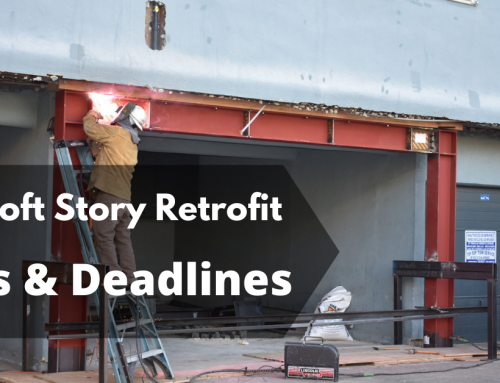
Steel moment frames use steel columns and beams to resist lateral movement while keeping the ground floor open. This makes them useful for buildings with tuck-under parking, garage bays, or storefront openings.
Unlike shear walls, moment frames do not need to fill the entire opening. They strengthen the open bay through rigid steel connections that resist bending during earthquake movement.
Moment frames usually cost more because they require steel fabrication, welding, engineering, new footings, and precise installation. They are often selected when preserving parking or access is worth the added complexity.
3. Braced Frames

Braced frames use diagonal steel members to resist lateral earthquake forces. The braces help reduce swaying and twisting at the weak story.
They can be effective in larger structural bays, commercial layouts, or areas where diagonal members can be placed without blocking daily use. In parking or storefront areas, brace placement has to be planned carefully because diagonal steel can interfere with movement and visibility.
4. Grade Beams, Footings, and Tie Beams

Grade beams, footings, and tie beams support the main retrofit system. They help transfer forces from new frames, braces, or columns into the foundation and surrounding soil.
These components are often needed when a steel moment frame or braced frame adds new concentrated loads at the ground level. They may require excavation, concrete work, temporary access changes, and finish restoration.
5. Foundation Anchorage
Foundation anchorage connects the retrofit system to the existing foundation. It may include anchor bolts, hold-downs, plates, or other engineered connections depending on the building design.
Anchorage matters because a retrofit system cannot perform if it separates from the foundation during shaking. If the existing foundation is cracked, undersized, or deteriorated, it may need strengthening before new anchorage can work properly.
6. Collector Elements, Drag Struts, and Diaphragm Connections
Collectors, drag struts, and diaphragm connections are the hidden parts of a soft-story retrofit. They move earthquake forces from the floors into the new shear walls, moment frames, or braced frames.
A visible steel frame or plywood wall does not automatically protect the building. Earthquake forces must be collected from the floor diaphragm and delivered into the retrofit system. These components are often concealed inside framing or finishes, but they are critical to performance.
Concrete Retrofit Techniques for Reinforced Concrete Soft-Story Buildings
Not every soft-story building in California is wood-framed. Some older apartment, commercial, and mixed-use buildings use reinforced concrete columns, beams, slabs, or podium-level structural systems. In those buildings, the retrofit may focus on strengthening deficient concrete members rather than adding plywood wall lines.
These methods are usually selected after a structural engineer checks column capacity, beam-column joints, slab behavior, concrete strength, reinforcement details, and foundation support.
1. Column Jacketing
Column jacketing strengthens an existing concrete column by adding reinforced concrete, steel, or another engineered jacket around it. The goal is to improve the column’s ability to carry vertical load and resist earthquake-related shear forces.
This method is useful when a soft-story condition is tied to weak or poorly confined columns at the lower level. The tradeoff is space: jacketing increases the size of the column and may affect parking clearance or the appearance of the lower floor.
2. Fiber-Reinforced Polymer Strengthening
Fiber-reinforced polymer, or FRP, uses high-strength wraps or strips bonded to concrete members. It can improve shear capacity, flexural strength, and column confinement without adding as much bulk as concrete enlargement.
FRP is more common in reinforced concrete retrofit work than in typical wood-frame soft-story apartment retrofits. It depends on correct surface preparation, bonding, detailing, and protection from fire or environmental exposure.
3. Section Enlargement
Section enlargement increases the size of an existing concrete beam, slab, or column by adding concrete and reinforcement. This improves stiffness, strength, and load-bearing capacity.
In a reinforced concrete soft-story building, section enlargement may be used when existing members are too small or lack the capacity needed to resist seismic forces. Engineers must also check whether the added weight affects the foundation or nearby structural members.
Moment Frames vs. Shear Walls for Soft-Story Retrofit
Moment frames and shear walls both strengthen weak lower floors, but they solve different layout problems.
Shear walls need wall space. Moment frames preserve openings.
Shear walls are practical when the building has enough usable wall area at the weak story. They are often more cost-effective than steel moment frames because they use reinforced wall sections to resist side-to-side earthquake movement. The limitation is layout: a shear wall may strengthen the building but reduce parking width, block part of a garage opening, or interfere with storefront access.

Steel moment frames are usually the better option when the ground floor needs to stay open. They use steel columns and beams with rigid connections, allowing the frame to resist lateral movement without filling the opening with a wall. The tradeoff is cost because moment frames often require steel fabrication, welding, new footings, grade beams, anchorage, and careful inspection.
Some buildings use both. A property may need shear walls along one side and a steel moment frame at the open parking front. The best design is not the strongest-looking system. It is the system that corrects the weak story without shifting forces into another vulnerable part of the structure.
Methods That Do Not Fix Soft-Story Weakness Alone
Some repair methods are useful during a seismic retrofit, but they should not be treated as complete soft-story solutions. A soft-story building needs a lateral force-resisting system. Crack repair or surface patching does not create that system.
1. Epoxy injection repairs stable cracks in concrete walls, slabs, beams, columns, or piers.

It may restore continuity in damaged concrete, but it does not correct a weak first story if the building lacks shear walls, moment frames, bracing, anchorage, or force-transfer connections.
2. Cosmetic crack repair improves appearance but does not confirm structural safety. A crack may be minor, or it may signal movement, settlement, corrosion, or seismic stress.
3. Isolated concrete patching can repair spalled, chipped, or deteriorated areas. It does not add the stiffness or strength needed to resist earthquake forces unless it is part of an engineered repair.
A repair can be part of the construction scope, but the retrofit itself must correct the structural weakness that makes the lower story vulnerable.
Cost Factors by Soft-Story Retrofit Method
Soft-story retrofit cost depends on the method, but the method is only one part of the estimate. The same steel moment frame can cost differently from one building to another if footing depth, access, tenant conditions, or load-transfer work changes.
The biggest cost drivers include the retrofit method selected, steel fabrication, welding, foundation excavation, concrete work, engineering, permit fees, access limits, hidden connection work, inspections, and finish restoration.
Plywood shear walls are often more cost-effective when usable wall space already exists. Steel moment frames usually cost more, but they may preserve parking spaces, storefront access, or open garage bays that a shear wall would block. Foundation work can also change the scope quickly if the existing footing is shallow, cracked, or undersized.
For owners comparing estimates, the scope should show more than the visible retrofit method. It should also identify foundation work, anchorage, collectors, inspections, and finish restoration.
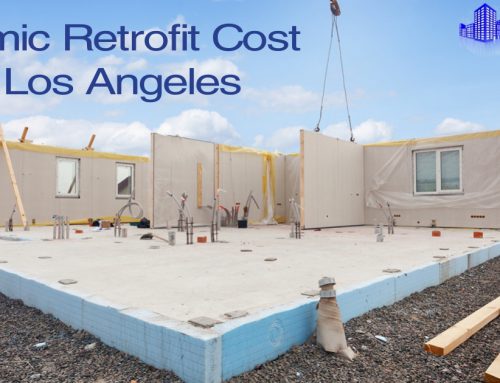
For a deeper pricing breakdown, review this guide to seismic retrofit cost in Los Angeles.
Soft-Story Retrofit Design and Permit Path in California
A soft-story retrofit usually follows this path: structural assessment, engineering design, plan review, permit approval, construction, inspection, and final documentation.
The process starts with a site review. The engineer checks the weak story, framing system, foundation condition, wall openings, parking layout, and existing load path. The design then identifies whether the building needs shear walls, moment frames, braced frames, foundation upgrades, collector connections, or concrete strengthening.
After the retrofit plans are prepared, they are submitted to the local building department for review. Once permits are approved, the contractor installs the approved system. Inspections confirm that the work matches the engineered plans before it is covered, finished, or closed out.
For buildings with city notices or ordinance deadlines, final documentation matters. It proves that the required retrofit work was completed and accepted by the local jurisdiction.
Soft-Story Retrofit Services in California
If a building has tuck-under parking, open ground-floor walls, wide garage bays, or storefront openings, the first step is not choosing a retrofit method. The first step is identifying where the structure is weak.
A soft-story retrofit service may include structural assessment, engineering coordination, shear wall or moment frame planning, foundation and anchorage work, permit support, construction, and inspection coordination.
LuxDevLA helps property owners plan and complete soft-story retrofit projects with a focus on code compliance, structural safety, and practical building use.
If your building has an open or weak first story, schedule a retrofit assessment before comparing methods or estimates. The right solution depends on the building’s layout, foundation, framing system, and required load path.
FAQs About Soft-Story Seismic Retrofitting Techniques
Can a soft-story retrofit be done without removing tenants?
A soft-story retrofit can often be done while tenants remain, but access may change during demolition, steel installation, foundation work, inspections, or parking-area construction.
Will soft-story retrofitting reduce parking spaces?
Soft-story retrofitting may reduce parking if shear walls are added in open bays. Steel moment frames are often used when the owner needs to preserve parking or garage access.
How long does a soft-story retrofit usually take?
A soft-story retrofit timeline depends on engineering, permit review, building size, foundation work, and retrofit method. Steel frames and new footings usually take longer than basic shear wall work.
What documents are needed before starting a soft-story retrofit?
Owners usually need existing plans, city notices, structural reports, engineering drawings, permit documents, and site access details before soft-story retrofit construction can begin.
Does soft-story retrofitting increase property value?
Soft-story retrofitting can support property value by reducing seismic risk, improving code compliance, protecting tenants, and making the building easier to insure, sell, or finance.
Summary
Soft-story seismic retrofitting in California usually centers on plywood shear walls, steel moment frames, braced frames, foundation anchorage, grade beams, and hidden force-transfer components such as collectors and drag struts. The right method depends on the building’s framing system, open-floor layout, foundation condition, and whether parking or storefront access must remain usable. Reinforced concrete soft-story buildings may need column jacketing, FRP strengthening, or section enlargement instead of typical wood-frame retrofit methods.