Last Updated on May 2, 2026
As a dedicated Perio Dentist in Northridge, my daily focus goes far beyond treating gum disease and placing dental implants. A massive part of my job is ensuring that every single person who walks through my doors feels completely at ease. Let’s face it, visiting the dentist can make people nervous. The sounds of a bustling clinic—the hum of an ultrasonic scaler, the whir of a handpiece, or even the murmur of a private medical conversation in the next room—can instantly elevate a patient’s heart rate.
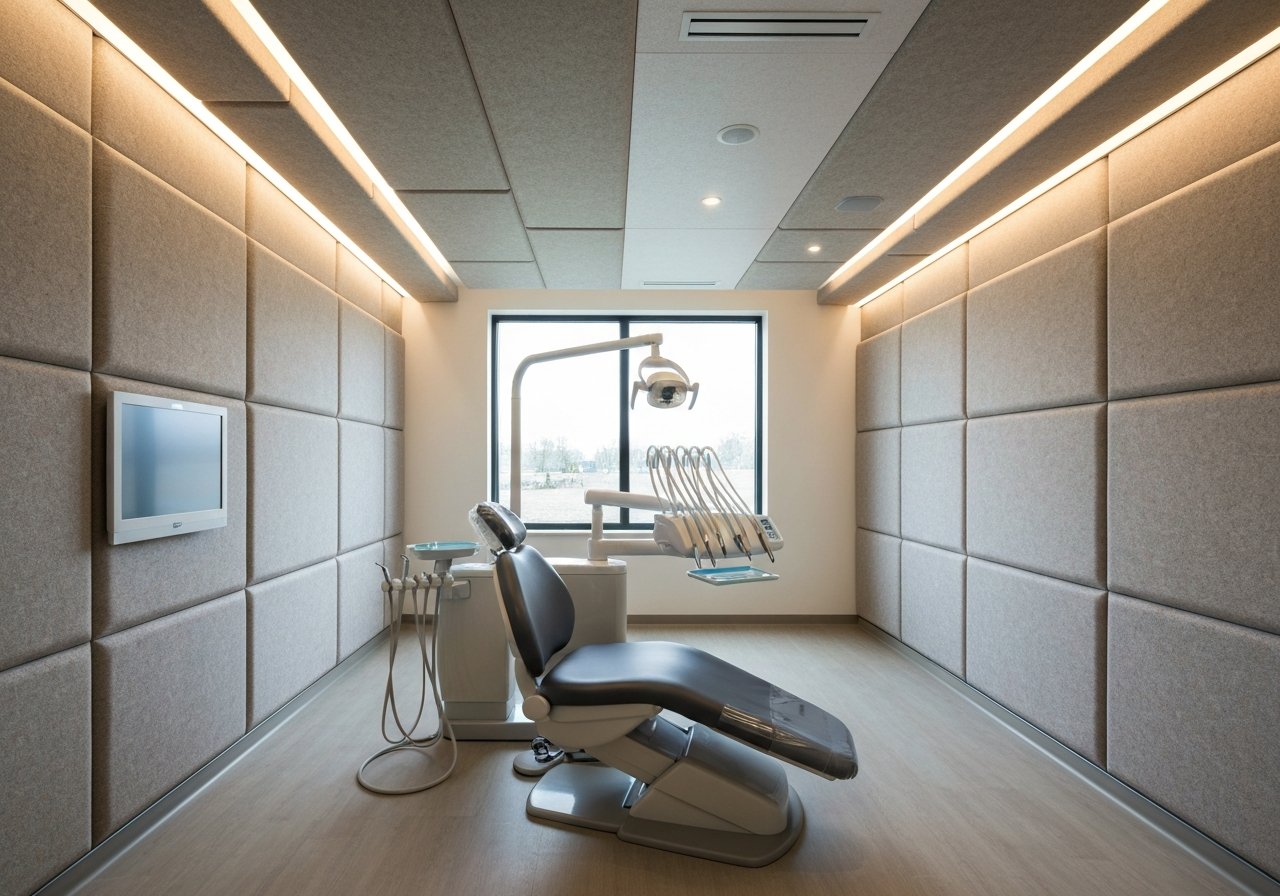
Creating a soothing, tranquil environment is not just a luxury; it is a vital part of modern patient care. When you step out of the busy traffic of the San Fernando Valley and into my practice, I want you to feel like you have entered a calm oasis. That is exactly why acoustic design is so important. Privacy is key in healthcare. Learn the best methods for soundproofing a dental office during a remodel or new construction. Whether you are a fellow healthcare provider planning a clinic upgrade, or a patient curious about the behind-the-scenes details of modern periodontal care, understanding how we manage sound is fascinating.
Contents
- The Hidden Impact of Noise on Patient Comfort
- Decoding Sound: How We Measure Quiet
- Top Methods for Blocking Sound in a New Construction
- Fixing the Flank: Ceilings, Floors, and Doors
- Managing HVAC and Air Duct Noise
- Active Sound Management: White Noise and Masking
- Bringing It All Together for the Northridge Community
The Hidden Impact of Noise on Patient Comfort
When we design a modern periodontal office, we have to think about the psychology of sound. As a specialist serving Northridge, Chatsworth, Granada Hills, and the surrounding areas, I see patients who require advanced treatments like gum grafting or implant surgery. Naturally, they want to relax.
Here is an important data point: Studies show that up to 75% of adults experience some level of dental fear, and the high-pitched sound of dental instruments is frequently cited as the primary trigger. By eliminating that noise travel, we dramatically improve the patient experience. Instead of hearing what is happening down the hall, our patients can listen to their favorite music, watch a relaxing video, or simply enjoy a quiet, peaceful room.
Furthermore, speech privacy is a legal requirement. Protecting a patient’s personal health information is mandated by the HIPAA Privacy Rule. You should be able to discuss your treatment plan, financial options, and medical history with me in complete confidence, knowing that the person in the adjacent operatory cannot hear a word.
Decoding Sound: How We Measure Quiet
Before we dive into the specific building methods, it helps to understand how acoustic professionals measure sound. The magic term here is STC, which stands for Sound Transmission Class. This rating tells us how well a wall, window, or door blocks sound from traveling through it.
Here is our second critical data point: Upgrading a standard interior wall to an STC rating of 50 or higher can reduce the transfer of perceived noise by over 75%. A normal home wall has an STC of about 33, meaning you can easily hear loud voices through it. In a high-quality periodontal or dental practice, we aim for an STC of at least 50 in our treatment rooms.
Comparison of STC (Sound Transmission Class) Ratings
Higher numbers indicate better soundproofing capability.
STC 33
STC 40
STC 50+
Top Methods for Blocking Sound in a New Construction
When building a brand new periodontal office here in Northridge, we have the perfect opportunity to get the acoustics right from the very beginning. It is much easier to put these soundproofing measures into the blueprints than to fix a noisy room later. Here are the most effective strategies I recommend for new construction.
Staggered Studs and Acoustic Insulation
In a normal wall, the wooden or metal studs connect the drywall on one room directly to the drywall of the next. When sound hits one side, the vibration travels straight through the stud to the other side. A staggered stud design offsets the framing so that the walls do not share the same physical connection. We then fill the empty space inside the walls with thick fiberglass or mineral wool acoustic insulation. This effectively traps the sound waves, completely stopping them from entering the adjacent treatment room.
Using Sound-Damping Drywall
Standard drywall is quite rigid and easily transfers noise. In a high-end dental space, we use specialized sound-damping drywall, such as QuietRock. These boards are manufactured with a layer of viscoelastic sound-absorbing polymer sandwiched between two layers of gypsum. If we are doing a remodel where taking down the walls is impossible, a fantastic alternative is to add a second layer of drywall and separate it from the first using a noise-proofing compound known as Green Glue. This compound changes sound energy into a tiny amount of heat, dispersing it safely away.
Mass Loaded Vinyl (MLV)
Mass Loaded Vinyl is a heavy, flexible material that comes in large rolls. We hang this material directly onto the framing before the drywall goes up. Because it is incredibly dense, it acts like a lead curtain for noise. It is one of the absolute best ways to stop airborne sounds—like conversations or equipment noises—from drifting through the walls of a dental practice.
Fixing the Flank: Ceilings, Floors, and Doors
You can build the thickest, most soundproof walls in the San Fernando Valley, but if you ignore the gaps, noise will find a way around them. In architecture, we call this “flanking.” Sound behaves a lot like water; it will leak through the path of least resistance.
The Drop-Ceiling Dilemma
Many medical spaces use drop ceilings. If the walls of the treatment room only go up to the drop ceiling and not all the way up to the true structural roof (the deck), sound will simply travel up, over the wall, and down into the next room. To solve this, we ensure that the drywall extends entirely to the roof deck. Additionally, we use specialized acoustic ceiling tiles with a high Ceiling Attenuation Class (CAC) rating to absorb any echoing sounds inside the room itself.
Sealing the Doors
A hollow interior door is practically useless for blocking sound. Upgrading to solid-core wood doors makes a remarkable difference. But even with a heavy door, the tiny gaps around the frame and underneath the door will let sound escape. Adding automatic door sweeps that drop down when the door closes, along with acoustic weatherstripping around the frame, ensures a tight, whisper-quiet seal. When my patients discuss their periodontal implant choices with me, they know our conversation stays in the room.
Managing HVAC and Air Duct Noise
Air conditioning vents are essentially hollow metal tubes that connect every room in the office. If you do not treat them, they work like an old-fashioned tin-can telephone, carrying the sound of my voice from Operatory 1 straight into the waiting room.
During our remodel in Northridge, we paid special attention to the HVAC system. Here is how we keep the air ducts quiet:
- Acoustic Duct Liners: We line the inside of the metal ducts with sound-absorbing materials to catch the echoing noises.
- Crosstalk Silencers: These are specialized baffles placed inside the air vents. They force the sound waves to navigate a maze, trapping the noise while allowing the fresh air to flow freely.
- Flexible Ducting: Replacing a short section of rigid metal ducting with flexible insulated ducting creates a break in the sound path, stopping vibrations from traveling down the metal.
Active Sound Management: White Noise and Masking
Even with brilliant physical soundproofing, a completely silent office can actually feel a bit sterile and uncomfortable. In a dead-quiet room, even the tiniest sound—like dropping a pen or opening a drawer—seems incredibly loud. This is why we use sound masking.
Sound masking systems emit a soft, unobtrusive background noise that sounds similar to gentle airflow. We place these speakers strategically in the hallways and reception areas of our Northridge clinic. The white noise is specially tuned to the frequency of human speech. By raising the ambient background sound just a tiny bit, it “masks” any stray conversations or soft instrument noises that might accidentally escape a treatment room. Combined with soothing background music, it creates an atmosphere that feels a lot more like a premium day spa than a traditional medical clinic.
Bringing It All Together for the Northridge Community
When I set out to brand myself as a trusted Perio Dentist in Northridge, Porter Ranch, and Reseda, I knew that exceptional clinical skills were only half of the equation. Gum disease treatments, periodontal scaling, and placing dental implants require precision, but they also require a patient to feel entirely safe and comfortable in my chair.
By investing in staggering studs, applying Green Glue, extending walls to the structural deck, and installing smart sound masking, we remove the auditory stress of the dental visit. The San Fernando Valley is busy enough. We deal with traffic on the 118 freeway, the hustle of daily life, and the endless noise of the city. Your visit to the periodontist should be a break from all of that.
Every decision we make in our clinic design is centered around patient well-being. Acoustic design and soundproofing are beautiful blends of science and empathy. It proves that modern dentistry cares deeply about your emotional comfort, your personal privacy, and your overall peace of mind. By prioritizing these elements, we build a foundation of trust before you even sit in the dental chair, ensuring that your journey to a healthier, more beautiful smile is as serene and positive as possible.