Last Updated on May 11, 2026
Contents
- Building the Dream Clinic: Why What’s Behind the Walls Matters Most
- The Unique Demands of Dental Office Plumbing
- Managing Water Quality in the San Fernando Valley
- Environmental Responsibility: Safe Waste Management
- The Power of Suction: Vacuum Lines and Compressed Air
- The Sterilization Center: The Hub of Safety
- Trenching and Concrete: Getting it Right the First Time
- Future-Proofing Your High-End Perio Clinic
- Embracing the Journey of Building Excellence
Building the Dream Clinic: Why What’s Behind the Walls Matters Most
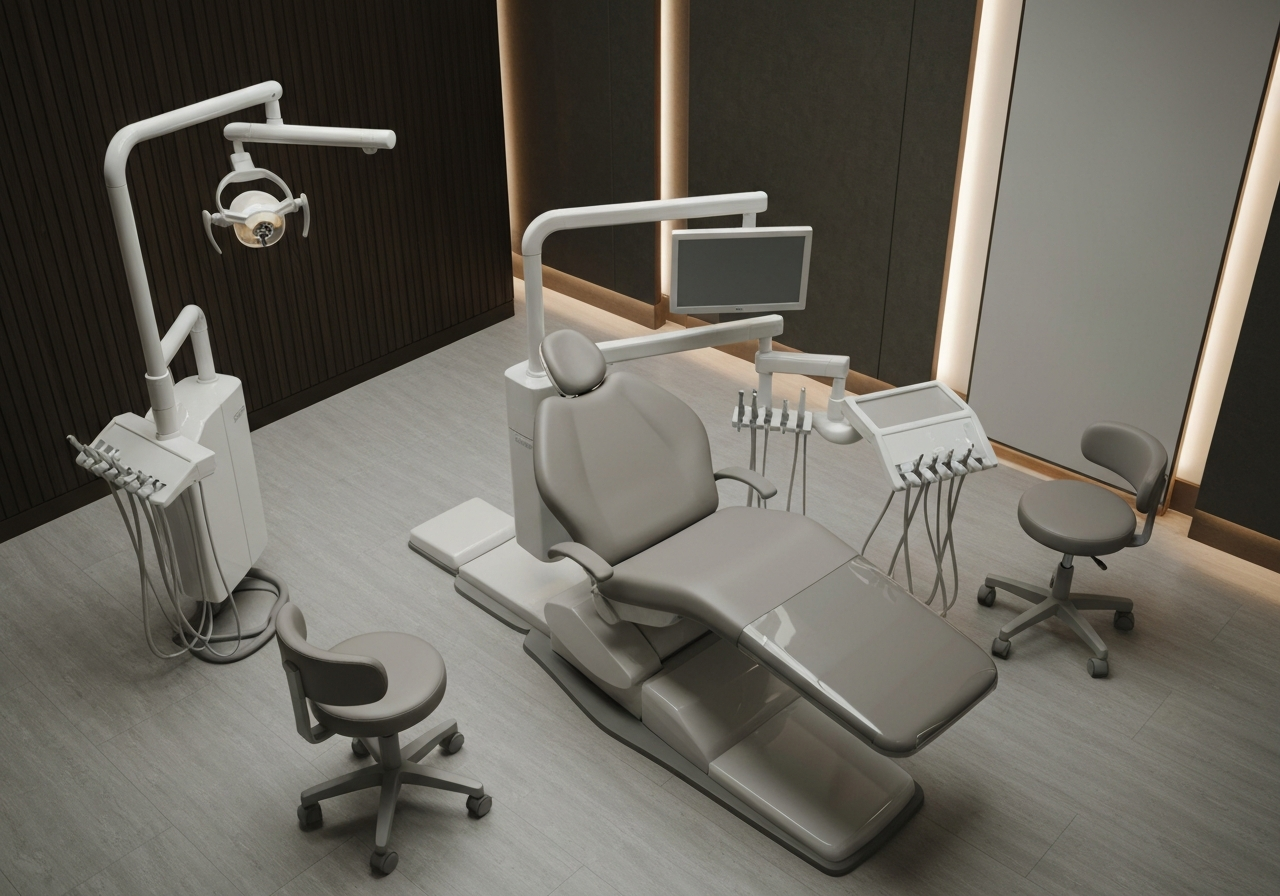
As a dedicated perio dentist serving Northridge and the surrounding areas of the San Fernando Valley, I have always believed that our patients deserve the absolute best. Whether I am placing a dental implant, performing advanced gum contouring, or helping a patient from Porter Ranch manage their periodontal health, the environment we work in plays a huge role in the level of care we provide. Upgrading or building a new periodontal practice is incredibly exciting. You get to pick out beautiful waiting room furniture, state-of-the-art dental chairs, and soothing color palettes that help patients feel right at home.
However, beneath those beautiful luxury vinyl floors and behind those freshly painted walls lies the true beating heart of any dental practice: the plumbing. It is completely vital that you understand complex dental office plumbing requirements before you start your high end remodeling project. If you overlook this invisible infrastructure, even the most visually stunning office will struggle to function.
Today, I want to pull back the curtain and share my personal experiences and professional insights on designing the perfect plumbing system for a modern dental and periodontal clinic. My goal is to help you build a seamless, efficient space while keeping a highly positive and forward-thinking mindset!
The Unique Demands of Dental Office Plumbing
If you have ever remodeled a home kitchen or a standard commercial bathroom, you might think plumbing is just about hot and cold water coming in, and wastewater going out. In a specialized periodontal clinic, the reality is much more fascinating. Our operatories require a highly orchestrated network of utilities to perform complex surgeries safely and comfortably.
Every single dental chair in my Northridge clinic requires a dedicated junction box hidden under the floor. This box connects the chair to several different utility lines:
- Potable Water: For rinsing and standard handpiece operation.
- Compressed Air: To power high-speed drills and air-water syringes.
- Central Vacuum Lines: Essential for keeping the surgical site dry and clear during periodontal procedures.
- Nitrous Oxide and Oxygen: For patient sedation and comfort.
- Drainage/Waste Lines: Specially angled to carry away water safely.
Getting this network right the first time is essential. To guarantee a smooth daily workflow and keep your team smiling, you must carefully plan your pipe layouts to avoid water issues. A simple leak or a lack of water pressure can throw off an entire day of carefully scheduled periodontal surgeries.
Managing Water Quality in the San Fernando Valley
Living and working in Southern California is a dream, but we do have our unique challenges. In Northridge, Chatsworth, and Reseda, we deal with notably hard municipal water. Hard water contains high levels of calcium and magnesium. While perfectly safe to drink, these minerals can wreak havoc on delicate, expensive dental equipment over time.
To protect my investment and ensure the highest safety standards for my patients, treating our water is a top priority. During our recent clinic upgrades, we installed advanced reverse osmosis (RO) systems and specialized dental water line treatments. When dealing with delicate periodontal tissues, maintaining perfectly sterile, purified water is non-negotiable. Mineral buildup in tiny water lines can lead to blockages or, worse, create an environment for biofilm to grow.
Data Point 1: According to dental industry efficiency studies, a standard multi-chair dental office uses approximately 300 to 500 gallons of water per day. Processing and filtering this volume properly requires heavy-duty, commercial-grade plumbing solutions that standard retail plumbers are often not trained to install.
Environmental Responsibility: Safe Waste Management
As a health professional, my commitment to health extends beyond my Northridge patients to the local environment. Dental practices generate specific types of waste that absolutely cannot go directly into the standard city sewer lines without treatment. Even as a perio dentist, we sometimes remove old restorative materials before addressing the gums and bone.
This is where amalgam separators come into play. These brilliant devices connect directly to our central vacuum plumbing. They use gravity and specialized filters to catch tiny particles of heavy metals, ensuring that our beautiful California waterways stay clean. It is not just a good idea; it is a federal requirement. If you are planning a build-out, I highly encourage you to review the EPA’s Dental Effluent Guidelines to ensure your new plumbing meets all environmental mandates perfectly.
The Power of Suction: Vacuum Lines and Compressed Air
If water is the lifeblood of the clinic, the central vacuum and air compressor systems are the lungs. During advanced periodontal therapies, having strong, consistent suction makes the procedure faster, cleaner, and vastly more comfortable for the patient.
When designing a plumbing layout, the placement of the mechanical room is crucial. Compressors and vacuum pumps generate noise. To keep my Northridge clinic feeling like a calm, high-end spa, we placed the mechanical room far away from the patient operatories. However, the further away the pump is, the harder it has to work to pull suction through the pipes.
This requires specific plumbing physics. The pipes must be perfectly sized—usually starting smaller at the chair and gradually increasing in diameter as they approach the main vacuum pump. Furthermore, dental waste lines must be installed with very precise downward slopes to ensure gravity assists the vacuum pull. A standard plumber might slope a pipe at a quarter-inch per foot, but dental suction lines often require exact grading to prevent the pooling of liquids that can eventually clog the system.
Visualizing the Infrastructure Investment
To give you a clearer picture of where the focus and resources go during a high-end dental plumbing build-out, I have put together a simple visual breakdown. This reflects the complexity of the hidden systems running beneath our feet.
Dental Plumbing Setup: Focus & Complexity
Percentage of specialized planning required for each plumbing sector
35%
30%
20%
15%
The Sterilization Center: The Hub of Safety
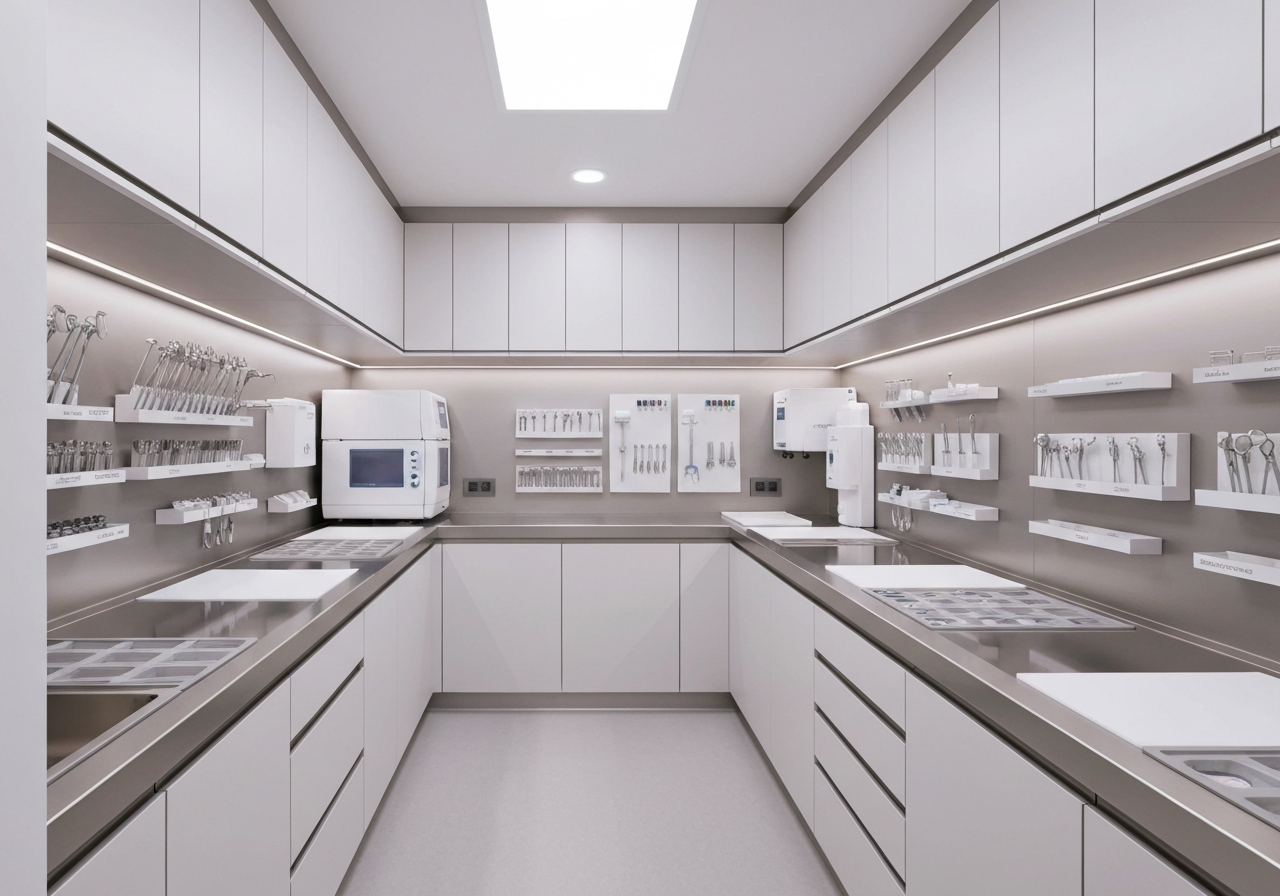
As a perio dentist, infection control is always at the forefront of my mind. The sterilization center (often called the “stercen”) is an area of the clinic where plumbing design truly shines. Modern dental practice design utilizes a very strict “dirty-to-clean” linear flow.
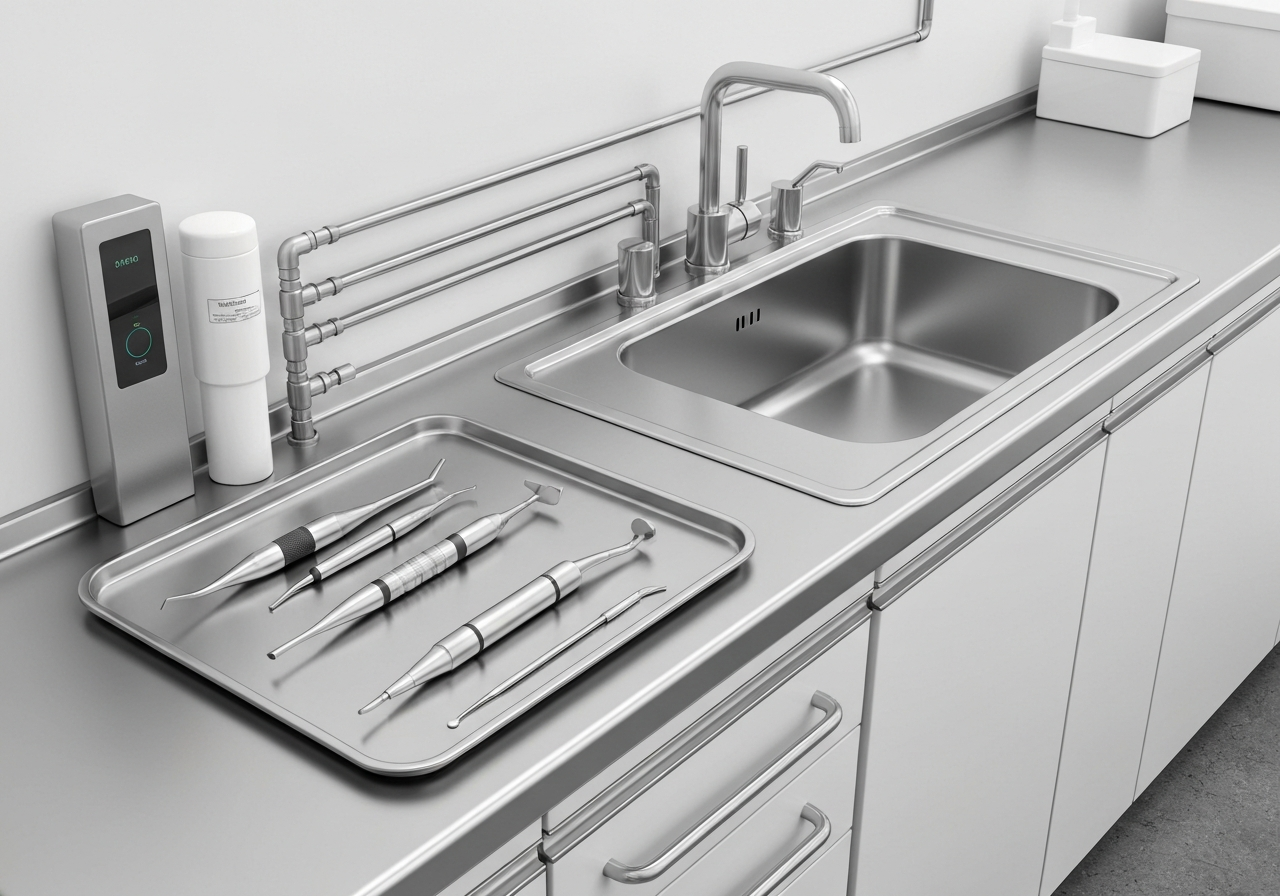
When instruments come in from an operatory, they enter the receiving area, which requires heavy-duty, deep stainless steel sinks equipped with hands-free electronic faucets. The plumbing here must easily handle ultrasonic cleaners and instrument washers. These specialized medical-grade washers need high-temperature water lines to function properly, often reaching temperatures much higher than a standard residential dishwasher.
As the instruments move down the line into the clean zone for autoclaving (steam sterilization), the plumbing needs shift. Autoclaves require pure, distilled, or deionized water to create the steam that sterilizes our surgical tools. Integrating an automatic water filling system directly into the plumbing layout saves our dental assistants hours of manual labor each week. By planning this early, we created a highly efficient environment that allows my team to spend less time managing equipment and more time caring for our wonderful Northridge community.
Trenching and Concrete: Getting it Right the First Time
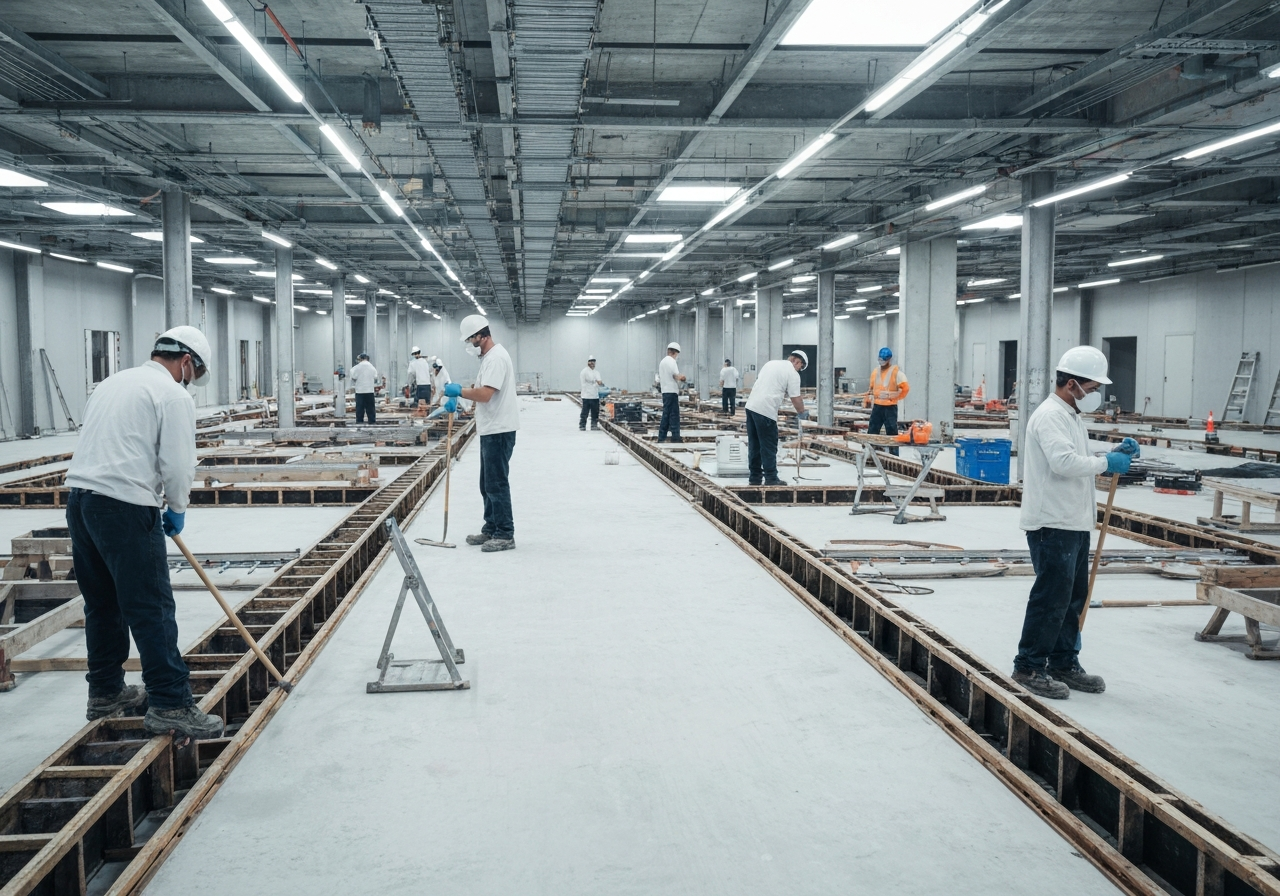
If you are taking over an existing commercial retail space in a place like Granada Hills or Porter Ranch, you will likely be staring at a solid concrete floor. Installing dental operatory plumbing means trenching—literally cutting and digging channels into that concrete to lay down your intricate network of PVC, copper, and specialized tubing.
This is the most critical phase of construction. Once the pipes are laid, pressure tested, inspected by the city, and the concrete is poured back over them, making changes becomes incredibly expensive and disruptive.
Data Point 2: Construction industry data reveals that nearly 40% of budget overruns in dental and medical office build-outs stem directly from underestimating specialized underground plumbing needs and subsequent rework.
By collaborating closely with a specialized dental contractor and a seasoned dental equipment representative, we mapped out the exact location of every dental chair down to the millimeter before a single concrete saw was turned on. This proactive, optimistic approach ensured our project stayed perfectly on budget and on time!
Future-Proofing Your High-End Perio Clinic
The field of dentistry is advancing at lightning speed. We are constantly adopting new technologies, from 3D cone beam scanners to advanced laser periodontal therapies. When investing in a high-end remodeling project, I knew I had to plan not just for today, but for the next twenty years.
We achieved this by installing oversized conduits in our plumbing trenches. Even if we do not need a specific water line or data cable today, having a wide, empty pipe running under the floor from the mechanical room to the operatories means we can easily fish new lines through in the future without ever having to break the concrete again. It gives me incredible peace of mind knowing my Northridge clinic can adapt effortlessly to whatever amazing new surgical technologies emerge in the coming decades.
Embracing the Journey of Building Excellence
Designing and constructing a top-tier periodontal practice is an incredibly rewarding adventure. While picking out the visual elements is always fun, taking the time to master the foundational infrastructure is what guarantees a successful, stress-free practice.
When you prioritize the hidden details—like ensuring exact pipe grading, investing in state-of-the-art water filtration, and creating an optimized sterilization flow—you are actively investing in the long-term health of your business and your patients. By working with specialized experts and keeping a positive, detail-oriented mindset, your remodeling project will transform into a brilliant success.
I take immense pride in knowing that every time a patient steps into my Northridge perio clinic, they are surrounded by an environment engineered for ultimate safety, comfort, and clinical excellence from the ground up. The walls may look beautiful, but it is the flawlessly designed plumbing running quietly beneath our feet that truly makes those daily smiles possible.